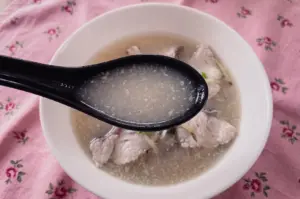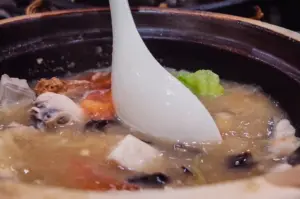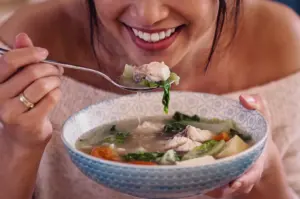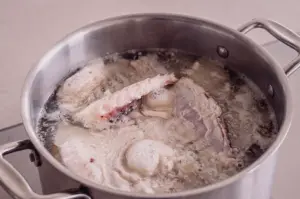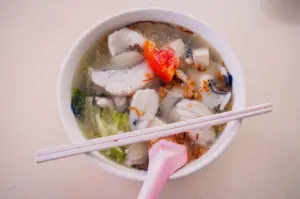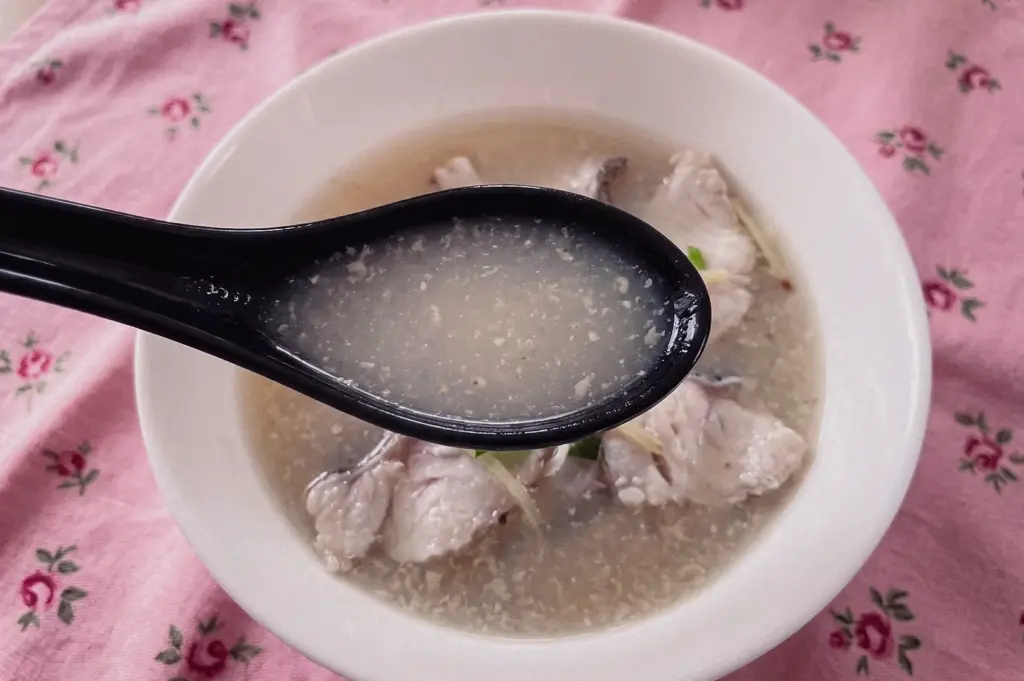
Put two bowls of fish soup side by side and they can look nothing alike. One is pale and see-through. The other is opaque, sometimes white, sometimes grey. Many diners read that difference as a verdict on quality. On its own, it isn't.
If you have wondered why fish soup broth is cloudy, the short answer is that something is suspended in the liquid. The real question is what that something is. Some cloudiness comes from good bones doing their work. Some comes from shortcuts or careless preparation.
This guide covers what causes cloudiness, how to tell good cloudiness from bad, and what colour can and cannot tell you about a bowl. It pairs with our guide on skimming fish soup broth, which covers impurities in more detail.
What Cloudiness Actually Is
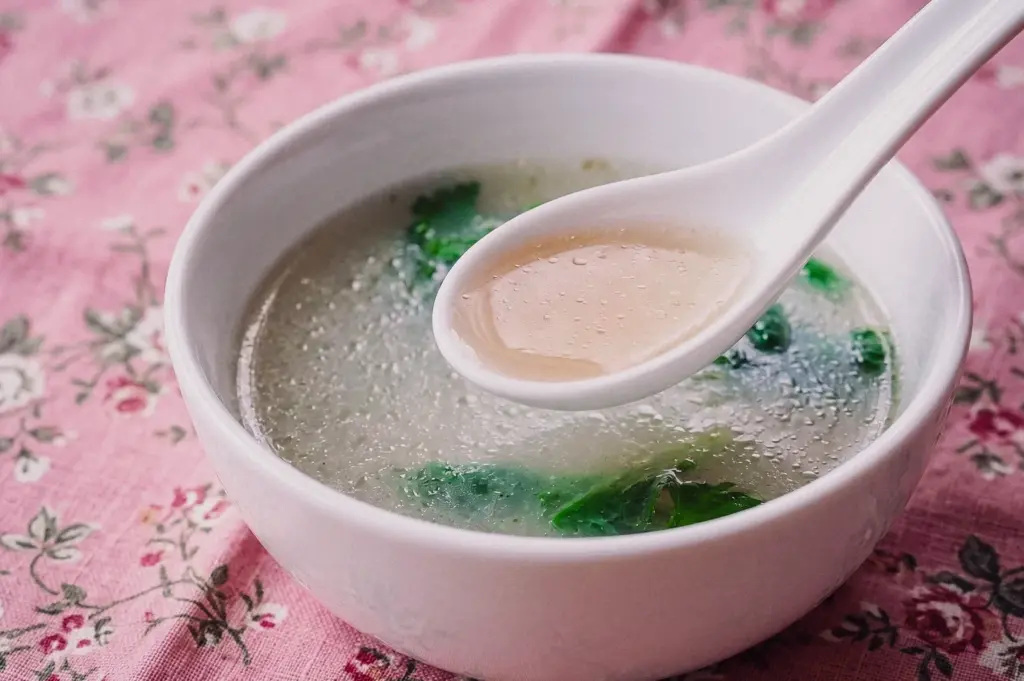
A clear broth lets light pass straight through. A cloudy broth holds tiny particles that scatter it. Those particles can be fat droplets, dissolved protein, gelatin, starch or bits of cooked blood.
The look depends on which particles are present and how they are spread. Fine, even droplets give a smooth white. Larger, uneven particles give a dull grey. Cloudiness describes a broth. It does not judge it.
Our own broth is cloudy on purpose. It is milky ivory, and it is the everyday bowl we serve on Havelock Road. You can discover the restaurant's everyday pricing on our homepage. Here, we explain how a broth gets that colour and what to look for in any bowl.
Four Common Causes of Cloudiness
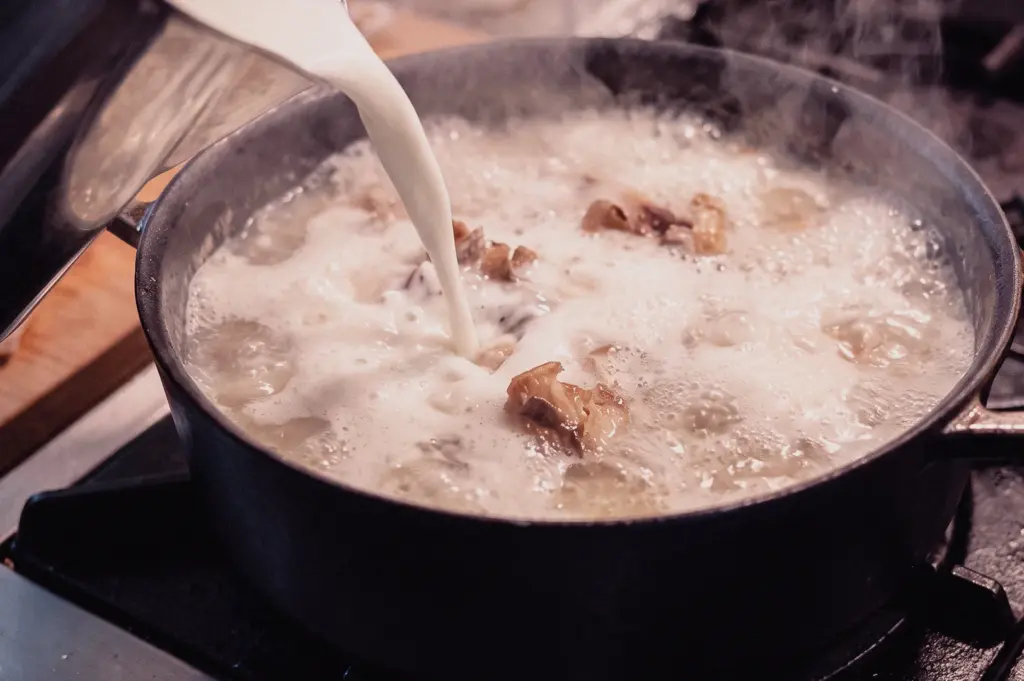
Emulsified fat and gelatin
When bones cook, collagen breaks down into gelatin, and small amounts of fat are released. Movement in the pot breaks that fat into tiny droplets. Gelatin and protein coat the droplets and hold them in the liquid, much as milk holds its fat. This cloudiness comes from the bones themselves.
Impurities left in the pot
Blood along the spine, leftover gills and the proteins that rise as scum all cook into fine grey particles. If nobody cleans or skims them away, a hard boil churns them back through the liquid. The broth turns murky and can taste bitter or metallic. This cloudiness comes from poor preparation.
Added dairy
Evaporated milk turns a broth white in minutes. It adds creaminess too. It also adds a taste that isn't fish. This cloudiness comes from a tin.
Starch and other bases
Rice, flour, or a shell or siput base can all thicken and cloud a broth. These are cooking choices, not faults. They do pull the flavour away from the fish.
Milky or Murky: How to Tell
You can usually tell the difference with your eyes, nose and tongue.
| Milky, from bones | Murky, from impurities | |
|---|---|---|
| Look | Even, bright ivory or white | Dull grey or brown, uneven |
| Smell | Clean, sweet of fish | Sour, stale or metallic |
| Finish | Coats the spoon, leaves the mouth fresh | Bitter, muddy or greasy |
| Surface | Little loose oil | Scum or an oily film |
A broth rich in gelatin often sets a little when chilled. That wobble shows the body came from the bones.
Does Cloudy Mean Good Quality?
Not by itself. A clear broth can be excellent. A cloudy broth can be excellent or poor. Colour tells you how a broth was made. Smell and finish tell you whether it was made well.
Why Our Broth is White
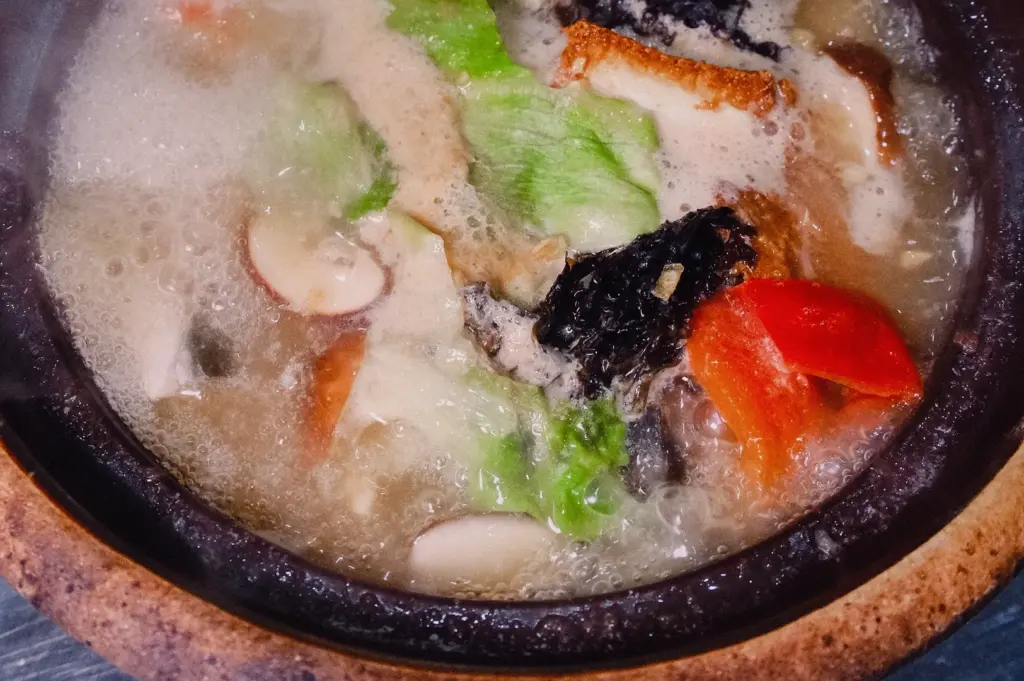
Our broth starts with batang bones, simmered with chicken and tee poh, the dried sole fillet. The collagen from the bones gives the broth its milky ivory body. There is no evaporated milk and no shell or siput base. The soup is white because the bones give everything.
The broth takes roughly an hour. The founder's father made his soup without a fixed written recipe. Chef Kee Leng, who is also a partner, balanced and refined it. He set the ratios, heat and timing so the kitchen makes the same bowl each service. Same colour, same body, every time.
Grandpa's Pomfret Soup, named in honour of the founder's father, is finished with generous pomfret slices, sng buay (sour plum), kiam chye (salted mustard) and julienned ginger. The broth supports the fish. The pomfret stays at the centre of the bowl.
Good Colour Starts with Good Fish
Bones can only give what they hold. Poorly handled fish brings more blood and off-notes into the pot, and those show up as murk. Knowing fish comes first.
The founder's grandfather worked before dawn. In the afternoons he hawked fish at the foot of Fort Canning, a pole across his shoulders. The founder's father helped from boyhood and later became a stallholder. The trade grew through a small factory into Hai Sia Seafood at Jurong Fishery Port, now run by the founder's brother.
Hai Sia Seafood supplies Hup Lok's founder-led kitchen today. Fewer hands sit between the fish and the bowl. The restaurant is new. The family's knowledge of fish is not.
Key Takeaways
- Cloudiness means particles are suspended in the broth.
- Fat and gelatin from bones give an even, milky white.
- Unskimmed impurities give a dull, grey murk.
- Milk and starch cloud a broth without adding fish flavour.
- Judge a bowl by smell and finish, not colour alone.
Next time you visit Hup Lok on Havelock Road, order Grandpa's Pomfret Soup. Look at the broth before you add the condiments. Check the colour, then taste the finish.