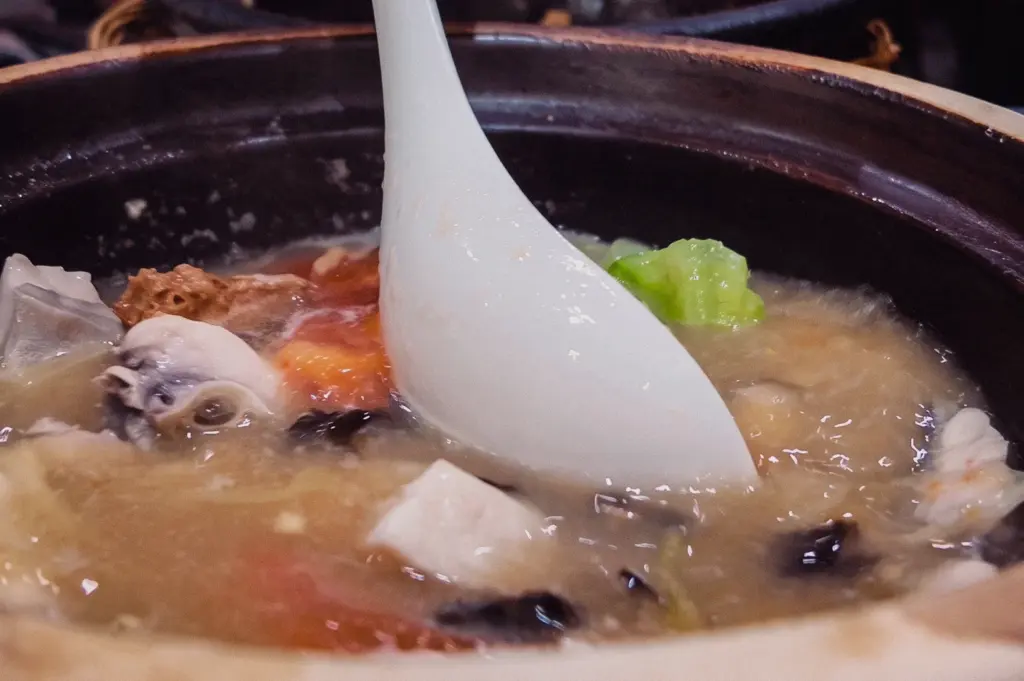
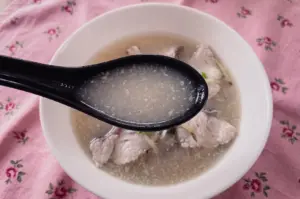
Body is the weight a broth has on your tongue. A thin broth runs off the spoon like water. A broth with body coats your mouth and stays there for a moment. Most of that difference comes from bones.
People often ask what gives fish soup body, and the honest answer is short. Bones, collagen and a little reduction do most of the work. Everything else is support.
This guide explains each part plainly. It also shows how our own broth is built, so you can see the theory in a real bowl.
The Short Answer
Body comes from collagen. Collagen sits in fish bones, skin and connective tissue. When bones simmer, that collagen breaks down and moves into the water.
Reduction can add some concentration on top. Starches and dairy can fake thickness. Real body starts in the bones.
Body is Not the Same as Colour
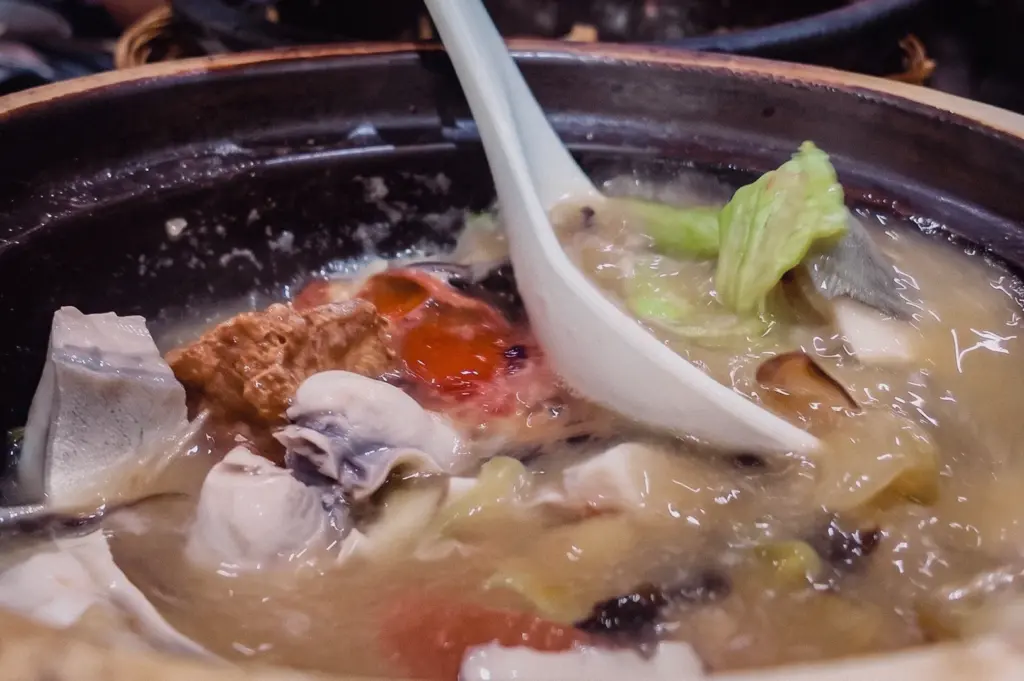
Some cooks chase body. Others prefer a clear fish soup with a lighter feel. Either way, body comes from the same place, and colour is a separate question.
A broth can be pale and opaque with plenty of weight. It can also be clear and still carry some body if the bones were good. Colour tells you how the fat and protein are spread through the liquid. Body tells you how much gelatin is in it.
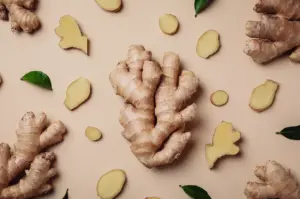
Body is also not the same as heaviness. A broth with good body should still feel lively. Sharp, clean flavours on the side help with that, which is why Teochew fish soup is so often served with ginger. There's more on ginger in fish soup in a separate guide. Weight and freshness can sit in the same bowl.
Part One: Bones
Bones are the starting point. They hold collagen in and around them, along with small amounts of flesh, skin and fat.
The kind of fish matters. So does how the bones are cleaned. Blood left along the spine turns bitter in the pot, so it has to go before cooking starts. Good body begins with clean bones.
Fillet alone will not do the same job. Flesh gives flavour, but it carries far less collagen than the frame. The bones are where the weight comes from.
Part Two: Collagen
Collagen is a protein that holds tissue together. Under steady heat and water, it loosens and turns into gelatin.
Gelatin is what you feel. It gives broth a smooth, slightly sticky texture and a fuller mouthfeel. A broth rich in gelatin often sets a little when it cools in the fridge. That wobble is body you can see.
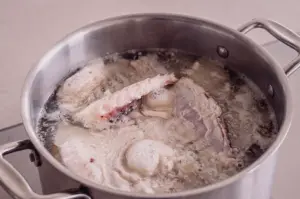
Heat decides how well this works. Too low and the collagen stays locked in the bones. Too hard a boil and the broth turns muddy and dull. A steady simmer draws out the gelatin cleanly.
Part Three: Reduction
Reduction simply means letting water evaporate. As the liquid shrinks, everything left behind becomes more concentrated. Flavour gets stronger. Gelatin gets denser.
Reduction helps, but it has limits. It can only concentrate what is already there. Reduce a weak broth and you get a smaller weak broth, often saltier than you wanted. Reduction finishes the work. It cannot start it.
What Doesn't Create Real Body
There are shortcuts. Evaporated milk adds creaminess and whiteness in minutes. Starch thickens the liquid. Shell or siput bases bring their own strong taste and some richness.
None of these are wrong as cooking choices. They just make the broth taste of something other than fish. Thickness from a tin is not the same as body from the bones.
How Our Broth Gets Its Body
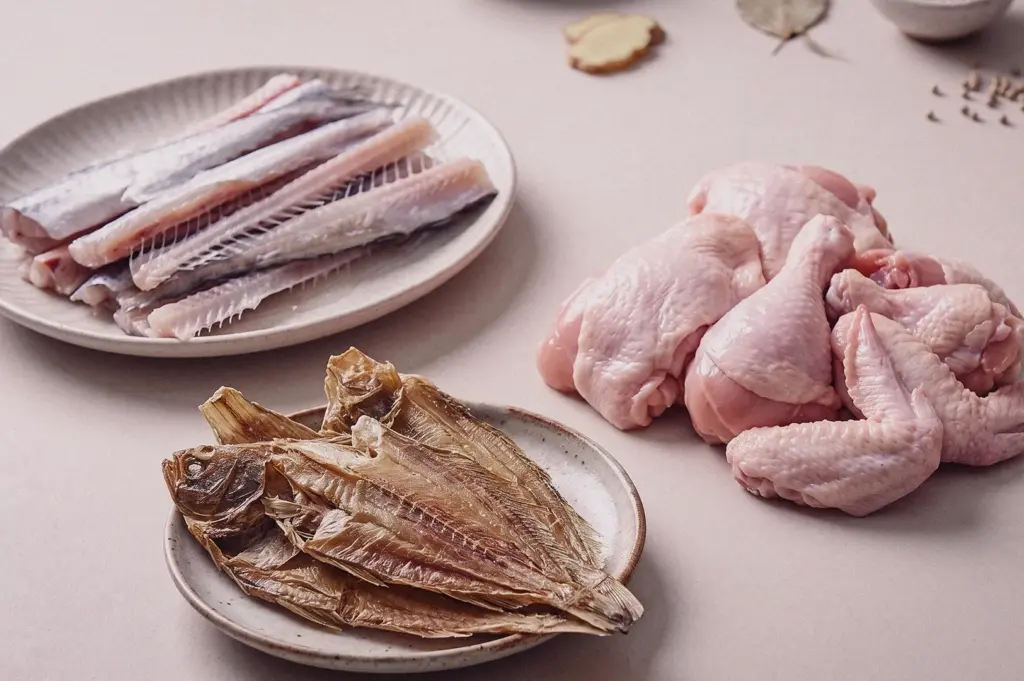
Our broth starts with batang bones. They simmer with chicken and tee poh, the dried sole fillet.
- Batang bones give the collagen, which becomes the body and the milky ivory colour.
- Chicken adds a soft savoury base underneath.
- Tee poh brings concentrated depth, because drying leaves the flavour behind.
There is no evaporated milk. There is no shell or siput base. The soup is white because the bones give everything.
The broth takes roughly an hour. Length was never the aim. The founder's father made his soup without a fixed written recipe. Chef Kee Leng, who is also a partner, balanced and refined it, setting the ratios, heat and timing so the kitchen makes the same bowl each service. Body that changes from day to day is not much use.
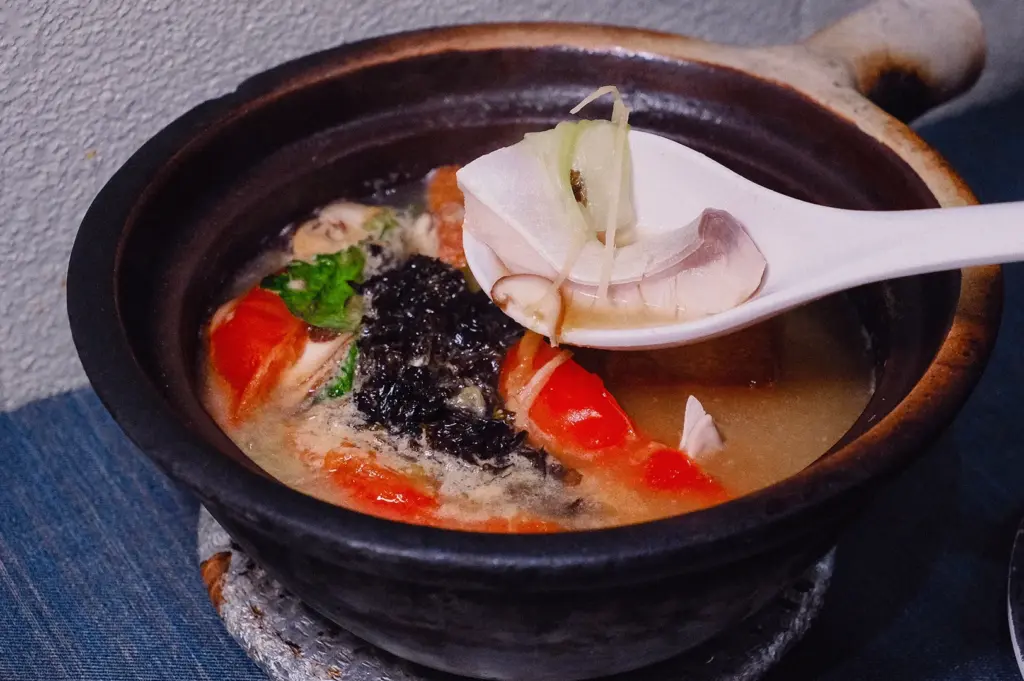
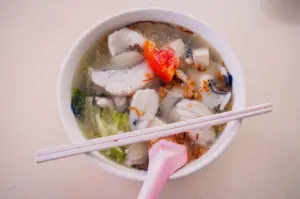
Grandpa's Pomfret Soup, named in honour of the founder's father, is finished with generous pomfret slices, sng buay (sour plum), kiam chye (salted mustard) and julienned ginger. The broth holds up the fish. The pomfret stays at the centre of the bowl.
Body Starts With the Fish
You can only draw out what the bones hold. That depends on the fish, and on knowing fish well.
Lists of the Best Fish Soup Singapore has to offer tend to talk about the bowl. The work behind ours started long before the restaurant. The founder's grandfather worked before dawn, then hawked fish at the foot of Fort Canning in the afternoons with a pole across his shoulders. The founder's father helped from boyhood and later became a stallholder at the market. The trade grew through a small factory in Redhill into Hai Sia Seafood at Jurong Fishery Port, now run by the founder's brother.
Hai Sia Seafood supplies our kitchen today. Fewer hands sit between the fish and the bowl. The restaurant is new. The family's knowledge of fish is not.
Key Takeaways
- Body is the weight and coating feel of a broth on your tongue.
- It comes mainly from collagen in bones, which turns into gelatin as it simmers.
- Steady heat draws gelatin out cleanly. A hard boil works against you.
- Reduction concentrates body but cannot create it from a weak base.
- Milk, starch and shell bases add thickness, not the same body.
To feel what bones can do, visit Hup Lok on Havelock Road and order Grandpa's Pomfret Soup. Take a spoonful of the broth on its own first and notice how it coats the spoon.


One Response