Most people judge a fish soup by its ingredients. The heat under the pot matters just as much. Get the cooking temperature for fish soup wrong and good bones turn into a dull, greasy or bitter broth. Get it right and the same bones give you depth and body.
This guide explains what heat does to a fish broth and why consistency matters more than a long cook. It pairs well with our guide that has more on clean light fish soup.
In short:
- Too little heat leaves a broth thin and flat.
- Too much heat pulls out stale, oily notes.
- Steady, repeatable heat matters more than hours on the stove.
What Heat Actually Does in the Pot
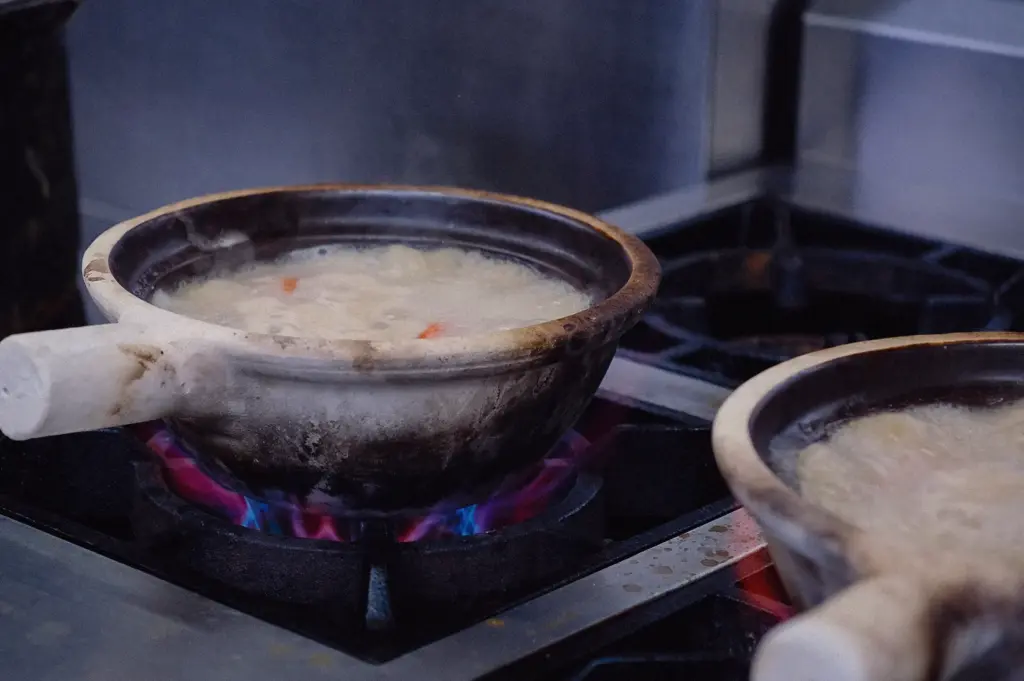
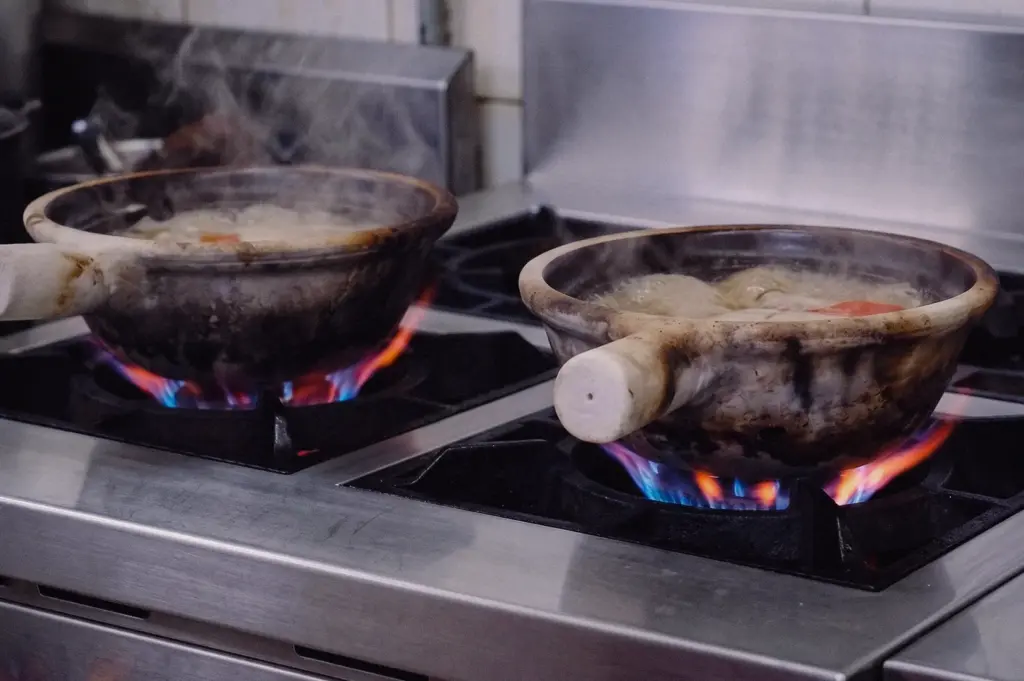
Heat is how flavour and body leave the bones and enter the water. Savoury depth comes out first. Collagen follows, breaking down into gelatin and giving the broth weight.
The level of heat decides how much comes out and in what state. It also decides what comes out alongside the good parts. Heat is not just about cooking. It is about choosing what ends up in the bowl.
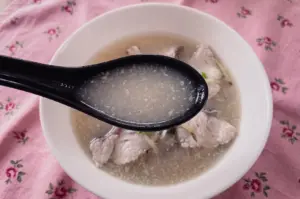
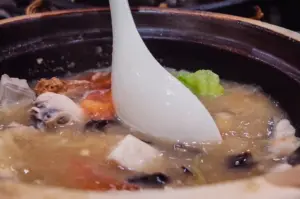
Hup Lok's pomfret fish soup is a good example. Its milky ivory body comes from collagen rendered out of the bones, not from anything poured in. That only works when the heat is right.
When the Heat is Too Low
A pot that barely moves extracts slowly. Some flavour comes out, but much of the collagen stays locked in the bones. The broth tastes faint and feels watery.
Cooks often try to fix this by adding salt or seasoning. That makes the broth louder, not deeper. Low heat starves the broth.
When the Heat is Too High
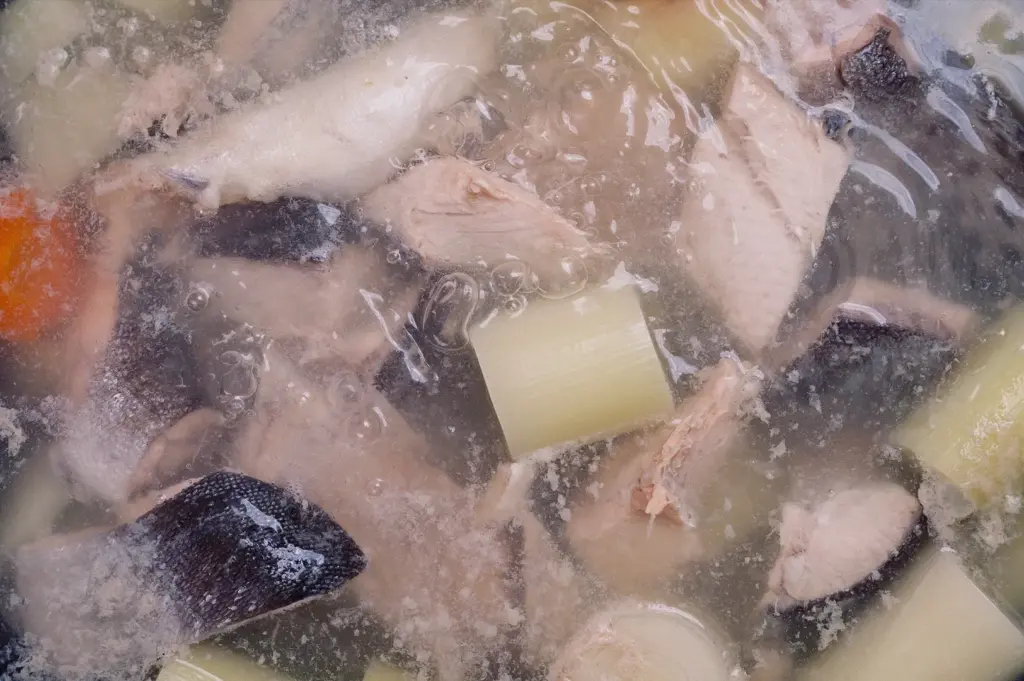
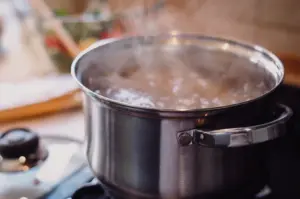
A hard, rolling boil does the opposite. It works the bones too aggressively and breaks down the delicate fats in fish. Those fats oxidise and bring stale, oily notes into the liquid.
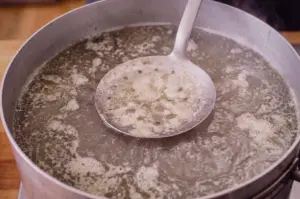
A violent boil also churns any blood or impurities through the broth instead of letting them settle or be skimmed. The result tastes muddy and can turn bitter. Too much heat does not add flavour. It adds the wrong flavour.
Hard Boil Versus Controlled Simmer
The difference between the two is easy to see.
| Hard boil | Controlled simmer | |
|---|---|---|
| Movement | Large, rolling bubbles | Steady, gentle movement |
| Fats | Broken down and oxidised | Held in better condition |
| Impurities | Churned through the liquid | Easier to manage |
| Flavour | Muddy, oily, sometimes bitter | Savoury and clean |
A controlled simmer gives the bones enough energy to release collagen and flavour. It stops short of damaging them. That balance is the whole job.
Heat Matters for the Fish Too
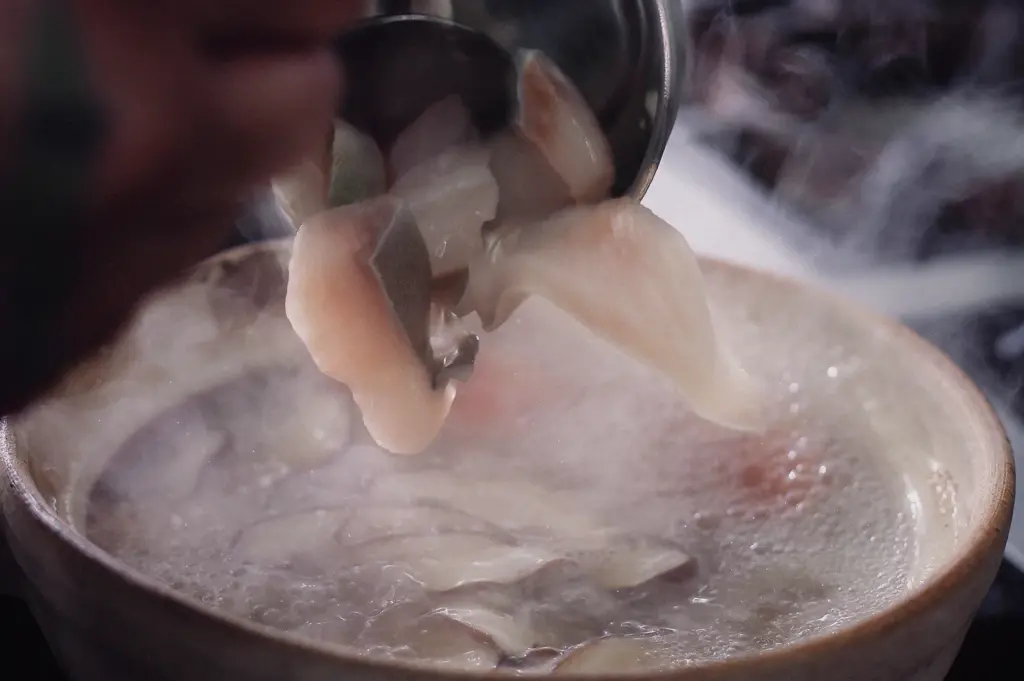
Heat does not stop mattering once the broth is done. Fish flesh is delicate and firms quickly. Leave slices in hard-boiling liquid too long and they turn dry and tough.
This is why the broth and the fish need different treatment. The broth needs time and steady heat. The fish needs care.
Why Consistency Beats a Long Cook
Many people believe a better broth simply needs more hours. Past a certain point, extra time at the wrong heat only draws out more of what you don't want.
Our broth takes roughly an hour. The founder's father made his soup without a fixed written recipe. Chef Kee Leng, who is also a partner, balanced and refined it into the version we serve today. He set the ratios, heat and timing so the kitchen can make the same bowl each service.
That matters because a collagen broth shifts easily. A little too cool and the body thins out. A little too hard and it turns heavy and dull. Fixed ratios and steady heat keep it where it should be.
What Goes Under that Heat
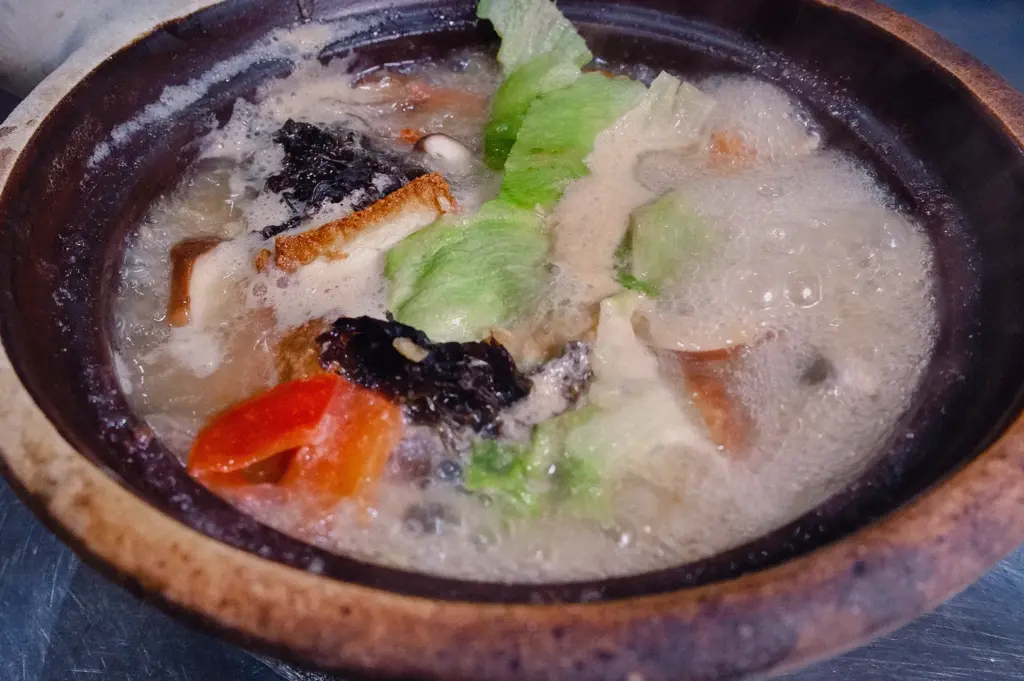
Heat can only work with what is in the pot. Ours starts with batang bones simmered with chicken and tee poh, the dried sole fillet. The bones give collagen and body. The chicken adds a soft savoury base. The tee poh brings depth.
There is no evaporated milk and no shell or siput base. The soup is white because the bones give everything. That is what fish soup made with real fish collagen means in practice.
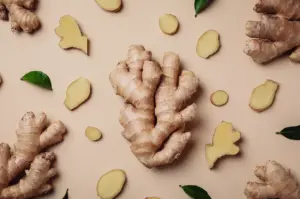
Grandpa's Pomfret Soup, named in honour of the founder's father, is finished with generous pomfret slices, sng buay (sour plum), kiam chye (salted mustard) and julienned ginger. The broth supports the fish. The pomfret stays at the centre of the bowl.
It Starts Before the Stove
Good heat control cannot save tired fish. Knowing fish comes first.
The founder's grandfather hawked fish at the foot of Fort Canning in the afternoons with a pole across his shoulders. The trade grew through a small factory in at Jurong Fishery Port, now run by the founder's brother.
Hai Sia Seafood supplies our kitchen today. Fewer hands sit between the fish and the bowl. That gives us more control before the heat is even switched on. The restaurant is new. The family's knowledge of fish is not.
Common Mistakes to Avoid
- Boiling hard to "speed things up"
- Keeping the heat so low that nothing renders out
- Simmering far longer than the bones need
- Leaving fish slices in boiling broth until they toughen
- Changing heat and timing from batch to batch
Key Takeaways
Heat decides what leaves the bones and what stays behind. Too little gives you a thin broth. Too much gives you a muddy, oily one. A controlled simmer, held the same way every time, gives you flavour and body you can count on.
To taste a broth built this way, visit Hup Lok on Havelock Road and order Grandpa's Pomfret Soup. Try a spoonful of the broth on its own before you add the condiments.