Ask ten cooks how long to simmer fish soup and you will hear ten answers. Some swear by a quick pot. Others leave bones on the stove all afternoon. Time on its own tells you very little.
What matters is what the heat is doing to the bones, and whether you stop at the right point. This guide explains:
- What actually happens during the simmer
- What a rushed broth looks and tastes like
- Why fish bones should not be cooked like pork or chicken bones
- Why consistency matters more than the number on the clock
How Long to Simmer Fish Soup: The Short Answer
Fish bones give up their goodness faster than meat bones. They are thinner, softer and carry less dense tissue. A fish broth needs far less time than a pork or chicken stock.
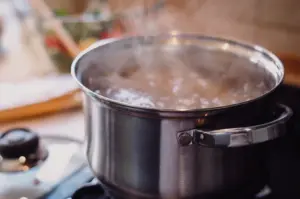
Our own broth takes roughly one hour. It does not take six. You can discover the restaurant behind the dish on our homepage, but here we will explain why an hour, done properly, is enough.
Time also shapes the weight of a broth. A short, gentle pot gives a lighter result. A fuller simmer with collagen-rich bones gives more body. There's more on light vs heavy fish soup broth in a separate guide.
What the Simmer is Doing
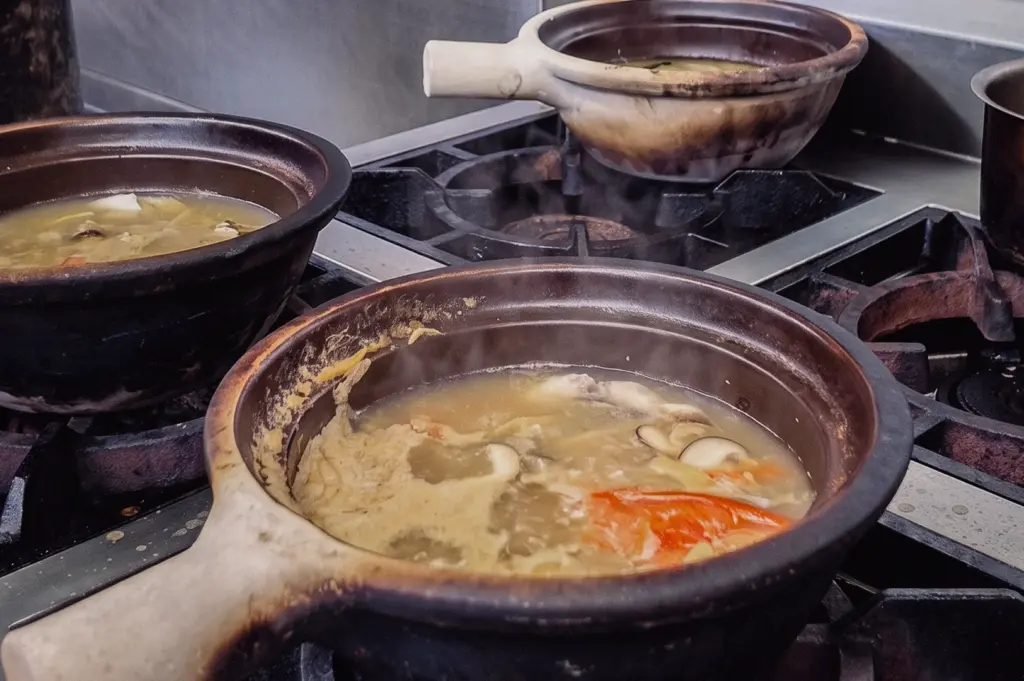
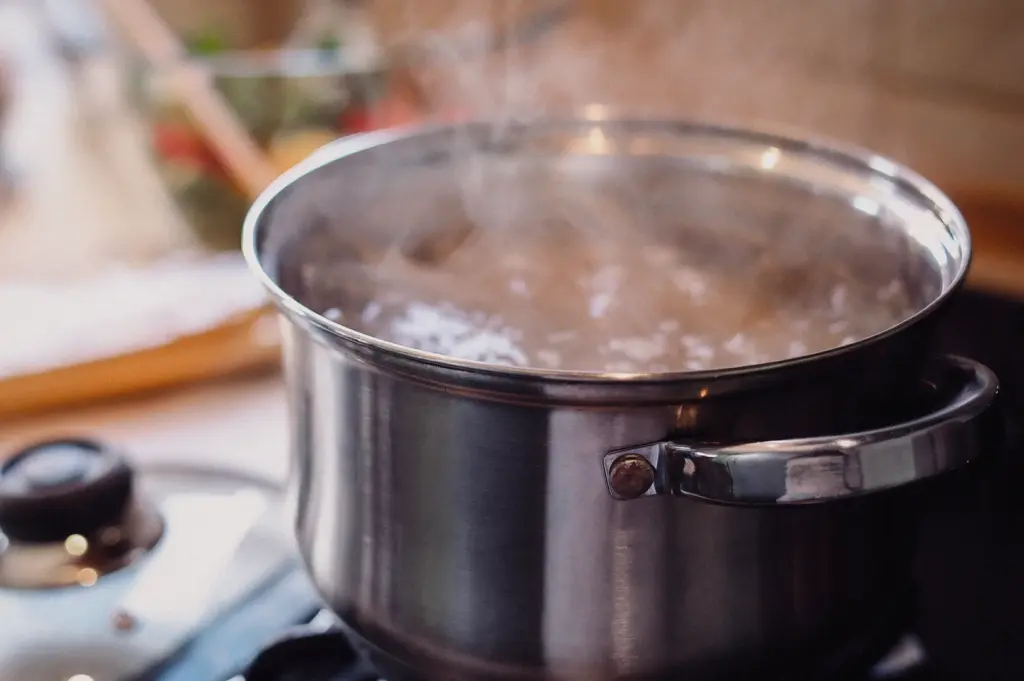
A simmer does three jobs at once.
It draws out collagen
Collagen sits in fish bones, skin and connective tissue. Steady heat turns it into gelatin, which gives broth its body. This is the step that takes the most time.
It releases flavour
Small bits of flesh on the frame, and any supporting ingredients, give their flavour to the water. This happens fairly early. Most of the sweetness comes out before the collagen is done.
It reduces the liquid
Some water evaporates as the pot cooks. What stays behind becomes more concentrated. Reduction only strengthens what the bones have already given.
What Happens If You Rush It
A rushed broth is easy to spot. It looks thin and tastes flat.
- Too little body. The collagen has not fully broken down, so the broth runs off the spoon.
- Weak flavour. The bones have not given everything they hold.
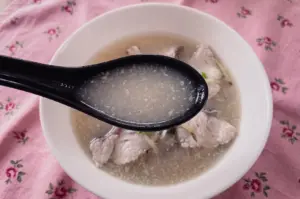
- Uneven colour. A broth built on bones turns white as fat and gelatin spread through it. Cut that short and it stays pale and patchy.
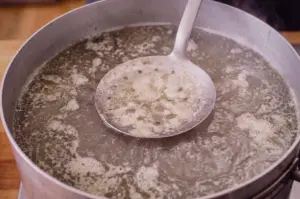
Turning up the heat to save time does not help. A hard boil churns impurities through the liquid and makes the broth muddy. Speed costs you clarity of taste.
What Happens If You Go Too Long
Longer is not always better with fish. Delicate bones break down past their best. The broth can turn bitter, chalky or stale. Fish rewards attention, not endurance.
This is why a fish broth should not be treated like a pork-bone stock. The two simply behave differently.
The Clock Matters Less than Consistency
The founder's father made his soup without a fixed written recipe. Chef Kee Leng, who is also a partner, balanced and refined it into the version we serve today. He set the ratios, heat and timing so the kitchen can make the same bowl every service.
That is the real point. Roughly one hour works because everything around it is fixed. A broth that changes from day to day is not much use to anyone.
How Our Broth Uses that Hour
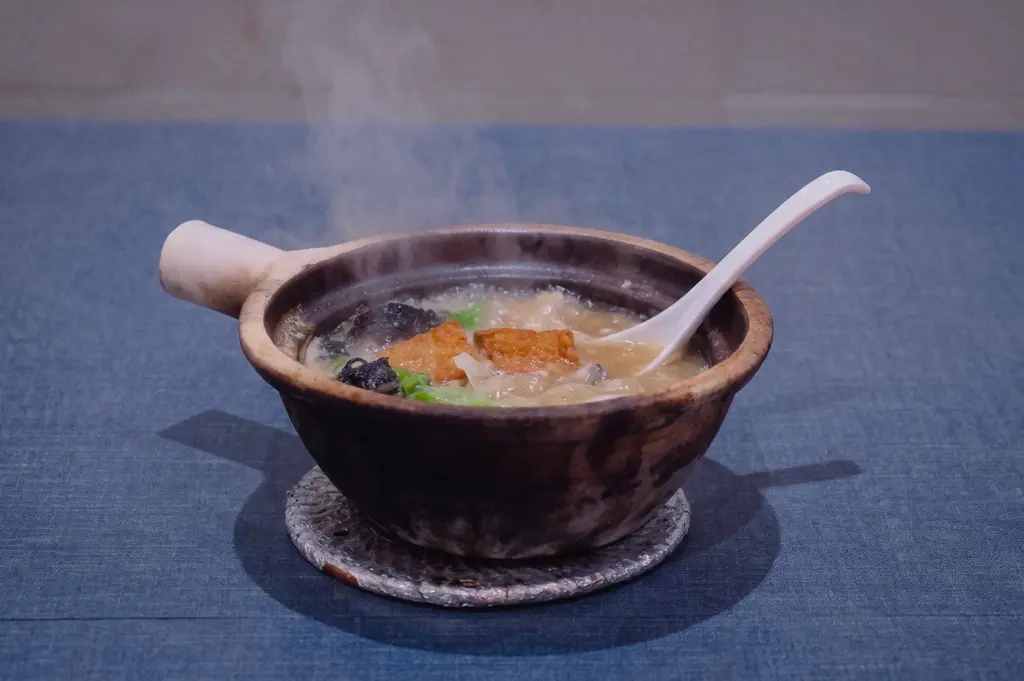
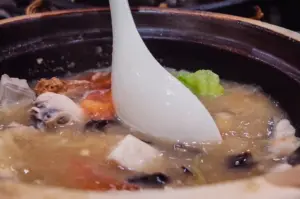
Our broth starts with batang bones, simmered with chicken and tee poh, the dried sole fillet.
- Batang bones give the collagen, which becomes the body and the milky ivory colour.
- Chicken adds a soft savoury base.
- Tee poh brings concentrated depth from the dried fish.
There is no evaporated milk. There is no shell or siput base. The soup is white because the bones give everything.
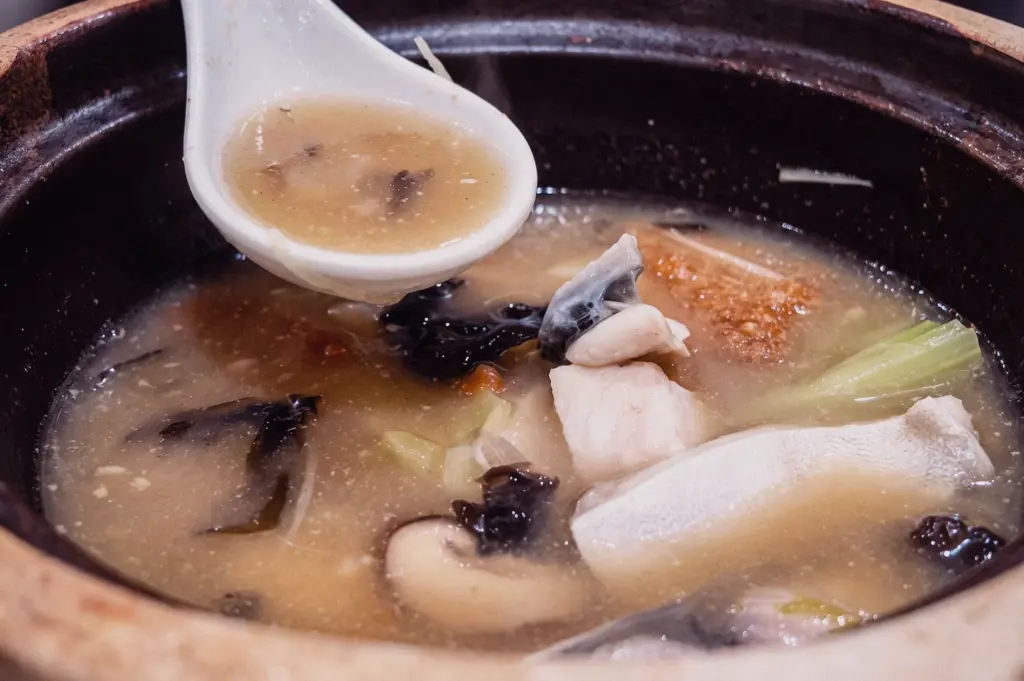
Grandpa's Pomfret Soup, named in honour of the founder's father, is finished with generous pomfret slices, sng buay (sour plum), kiam chye (salted mustard) and julienned ginger. The broth supports the fish. The pomfret stays at the centre of the bowl.
It Starts with the Fish
An hour can only draw out what the bones hold. That depends on the fish, and on people who know it.
The founder's grandfather worked before dawn, then hawked fish at the foot of Fort Canning in the afternoons, a pole across his shoulders. The founder's father helped from boyhood and later became a stallholder. The trade grew through a small factory into Hai Sia Seafood at Jurong Fishery Port, now run by the founder's brother.
Hai Sia Seafood supplies Hup Lok on Havelock Road today. Fewer hands sit between the fish and the bowl. The restaurant is new. The family's knowledge of fish is not.
Key Takeaways
- Fish bones need far less time than meat bones.
- A rushed broth is thin, flat and pale.
- An overcooked broth can turn bitter or chalky.
- A hard boil is not a shortcut.
- Fixed ratios, heat and timing matter more than total hours.
Next time you are near Havelock Road, come in and order Grandpa's Pomfret Soup. Taste the broth on its own first, and judge the hour for yourself.