Search for a pomfret clear broth pairing and you'll find the same advice again and again. Pomfret is delicate, so keep the soup light. That advice is half right. The real point isn't clarity. It's what the broth is made of, and whether it supports the fish or covers it.
Our broth at Hup Lok isn't clear. It's milky ivory. Yet it follows the same logic that makes people reach for a light soup in the first place. This guide explains why. You'll learn what pomfret needs from a broth, why collagen does that job better than cream or heavy stock, and how the condiments finish the pairing.
What People Mean by "Clear Broth"
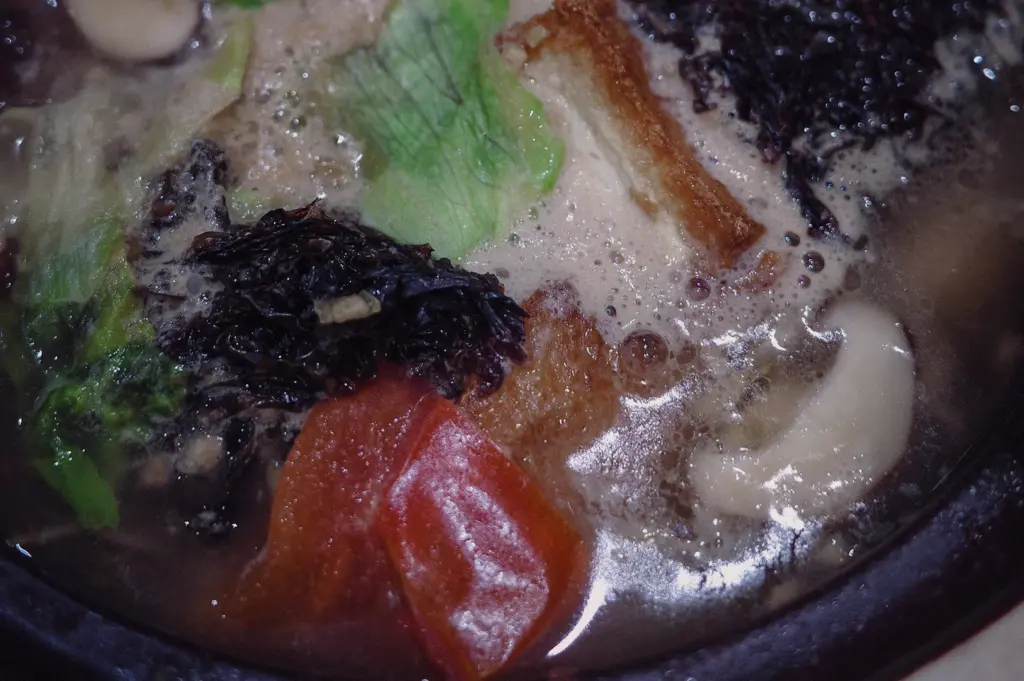
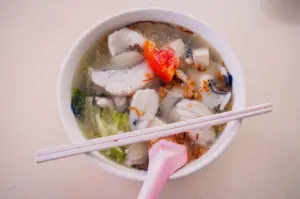
When people ask for a clear broth with pomfret, they usually mean something simple. They want a soup that doesn't bury the fish.
That instinct is sound. Pomfret's flavour is quiet, so a thick, cream-based or heavily spiced soup will drown it. Clarity is often used as a shorthand for lightness. But a soup can be light without being clear.
The better question is this: where does the broth's body come from? If it comes from dairy, starch or strong aromatics, the fish loses. If it comes from bones, the fish has something to rest on. That's the distinction this guide is about.
What Pomfret Needs From a Broth
Pomfret has fine, tender flesh that flakes apart gently. Its sweetness is mild and clean. It doesn't fight back against strong flavours. It simply disappears under them.
So the broth has two jobs. It needs enough body to carry the fish. It also needs to stay out of the way. A thin broth gives the pomfret nothing to lean on, and a heavy one smothers it. The right pairing sits in between.
Texture matters as much as taste here. Soft fish needs gentle handling in the pot and in the bowl. If you want the fuller picture, you can read about why pomfret can be difficult to cook well. The short version: the margin for error is small. The broth shouldn't make it smaller.
Why Collagen is the Right Kind of Richness
This is the technical heart of the pairing. Collagen gives a broth body without making it heavy.
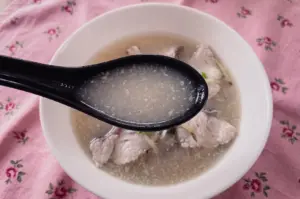
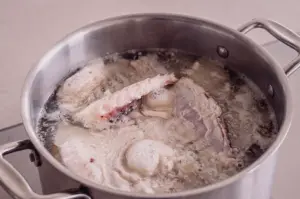
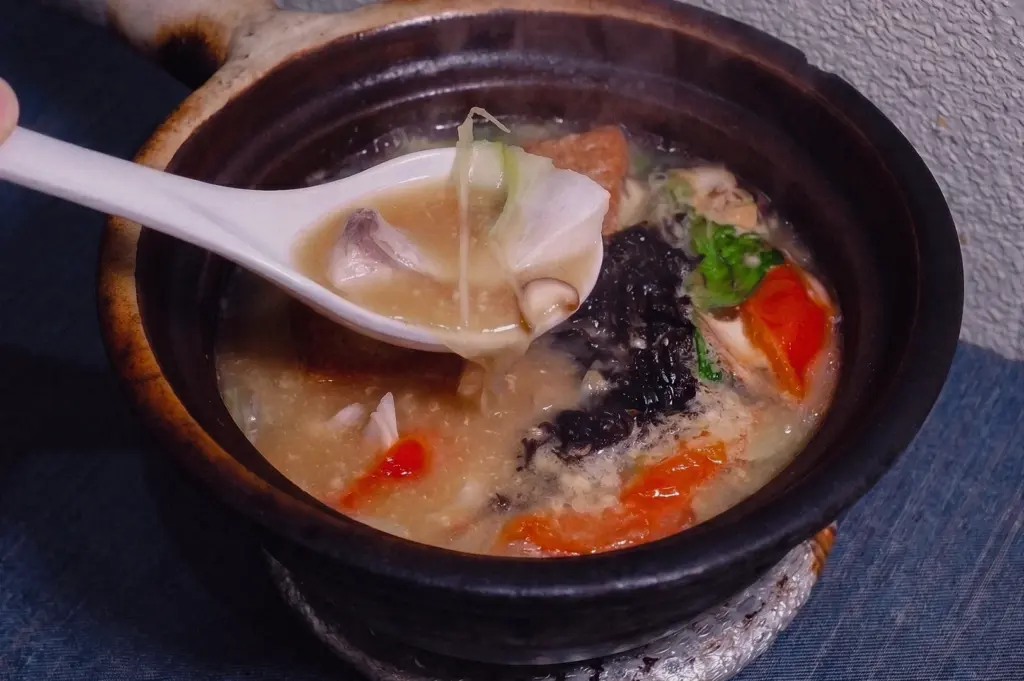
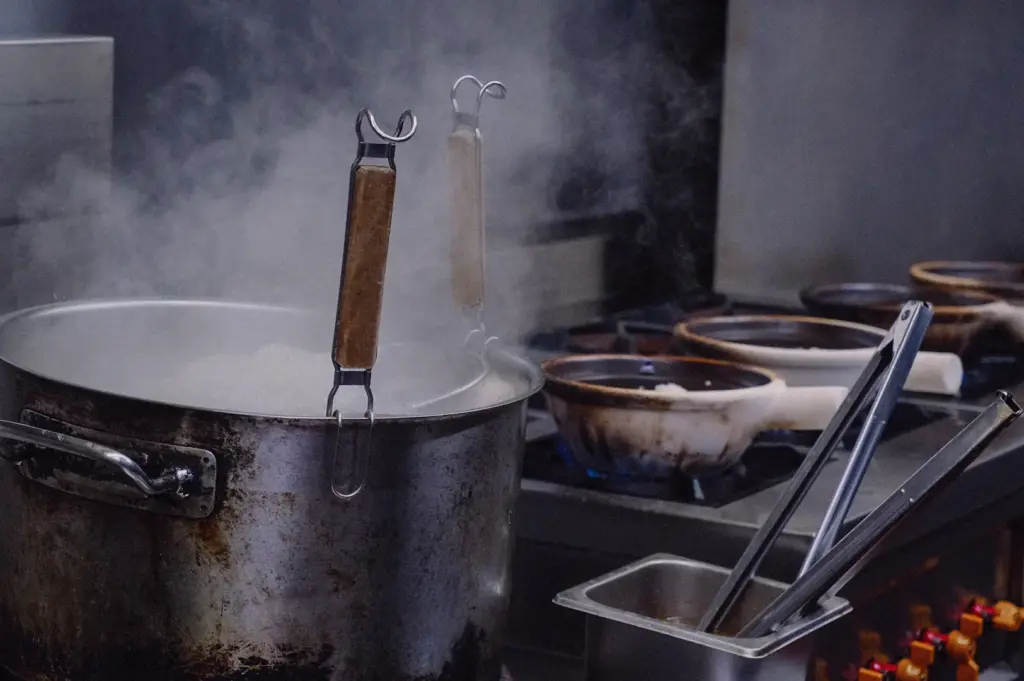
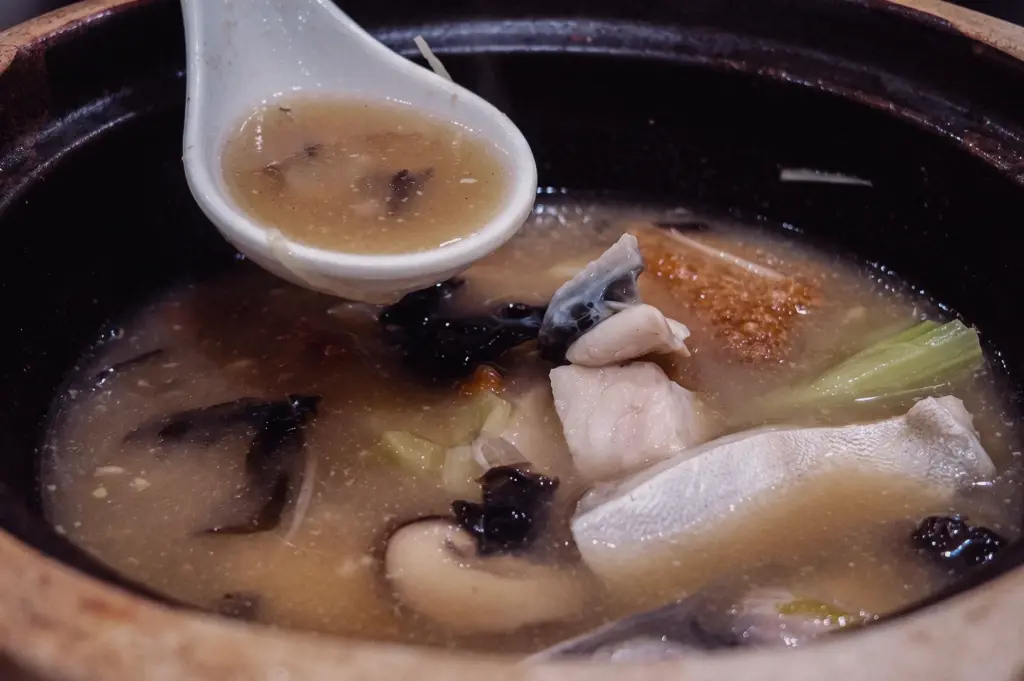
Our broth is made from batang bones simmered with chicken and tee poh, the dried sole fillet. As it cooks, the collagen renders out of the bones. That gives the soup its naturally milky ivory body. There's no evaporated milk and no shell or siput base. The soup is white because the bones give everything.
Collagen-rich body behaves differently from cream. It coats the spoon and the fish lightly, then clears from the palate. Cream lingers and dulls whatever comes next. With pomfret, that difference shows up in every mouthful.
The ingredients also share a family resemblance. Batang bones and tee poh are fish. Chicken adds a rounded savouriness underneath. Nothing in the pot pulls the flavour away from the sea. The broth tastes like it belongs with the fish, because it largely comes from fish.
You can see this for yourself in the Hup Lok dining room. Watch the colour of the soup, then taste how little it weighs on the pomfret. That contrast is the whole argument.
How the Condiments Complete the Pairing
A rich broth needs a counterweight. Grandpa's Pomfret Soup gets it from three traditional Teochew condiments.
- Sng buay (sour plum) adds acidity, which keeps the collagen body from feeling flat.
- Kiam chye (salted mustard) brings a savoury, salted edge.
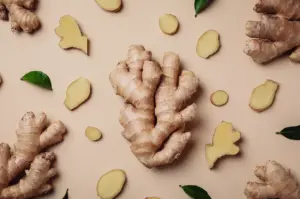
- Julienned ginger lifts the broth and keeps the fish tasting clean.
Each does one job. None of them crowds the pomfret. The broth carries, the condiments sharpen, and the generous pomfret slices stay at the centre of the bowl.
The Knowledge Behind the Pairing
Knowing what a fish needs comes from handling a lot of it.
The family's work with fish started with the founder's grandfather hawking fish at the foot of Fort Canning in the afternoons. The founder's father helped from boyhood and later had his own stall at Mei Ling market. The trade grew into Hai Sia Seafood at Jurong Fishery Port, now run by the founder's brother. That's three generations working with fish before the first bowl was served.
The soup itself was refined by Chef Kee Leng, who is also a partner. He worked out the ratios, heat and timing so the kitchen can make the same bowl each service. Consistency matters more than a long simmer. The broth takes roughly an hour.
That's what makes this bowl a contender for anyone looking for a contender for a memorable fish soup experience. Not a claim, but a method you can taste.
Key Takeaways
- "Clear broth" is usually shorthand for a soup that doesn't overpower the fish.
- Pomfret needs a broth with body, but without heaviness.
- Bone-rendered collagen provides that body and clears cleanly from the palate.
- Our broth is milky ivory from batang bones, chicken and tee poh, with no milk added.
- Sng buay, kiam chye and ginger balance the richness and keep the pomfret at the centre.
The pairing works because every part of the bowl serves the fish. To taste it, come by Hup Lok on Havelock Road and order Grandpa's Pomfret Soup. Have the pomfret first, then the broth.