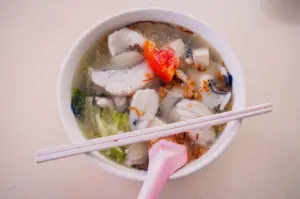
Pomfret is a soft fish. That's the first thing to know if you're wondering how it survives a hot broth without turning to mush. The flesh is fine and tender, and cooked right it goes almost silky, with a mild, clean sweetness. Get it wrong and that same softness works against you. This guide explains how pomfret holds up in hot broth, and what it takes to keep the fish whole and tender in the bowl.
Why Pomfret is Easy to Overcook
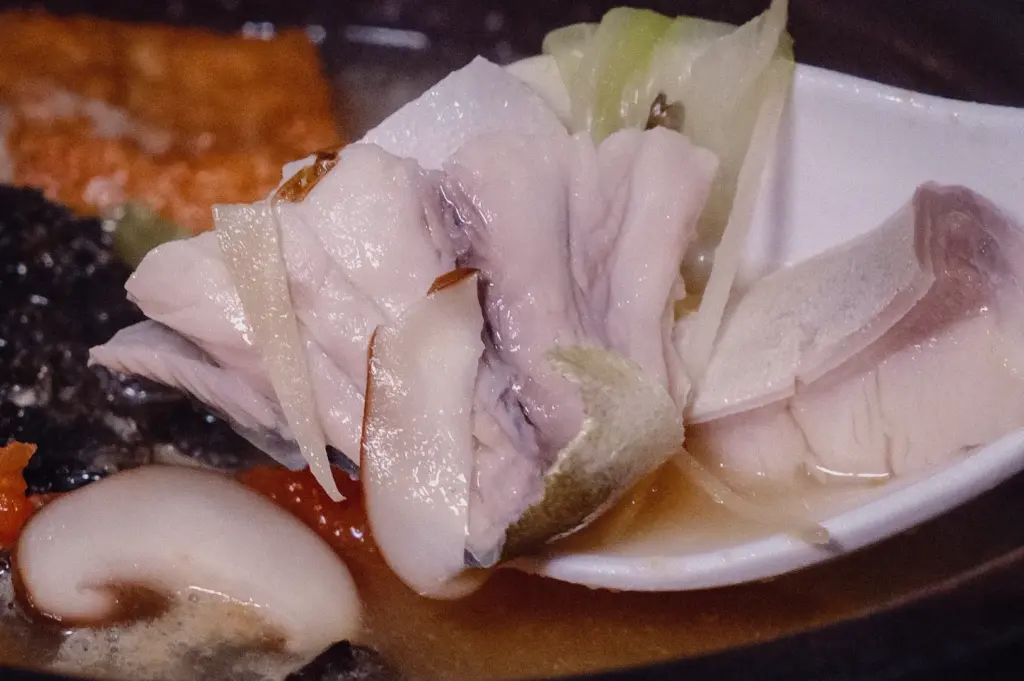
Firm fish gives you room for error. Pomfret doesn't.
Its flesh is delicate and flakes apart gently, which is exactly why people love it. That same delicacy means it cooks fast and firms up faster still. A minute or two too long and the silky texture turns dry and stringy. The window between just-right and overdone is narrow, so timing isn't a nice-to-have. It's the whole game.
This is also why pomfret can seem to fall apart in a rolling boil. A hard, rapid bubble knocks the tender flesh around and breaks it up before it's even properly done. The fish needs gentler handling than that.
The Broth does Half the Work
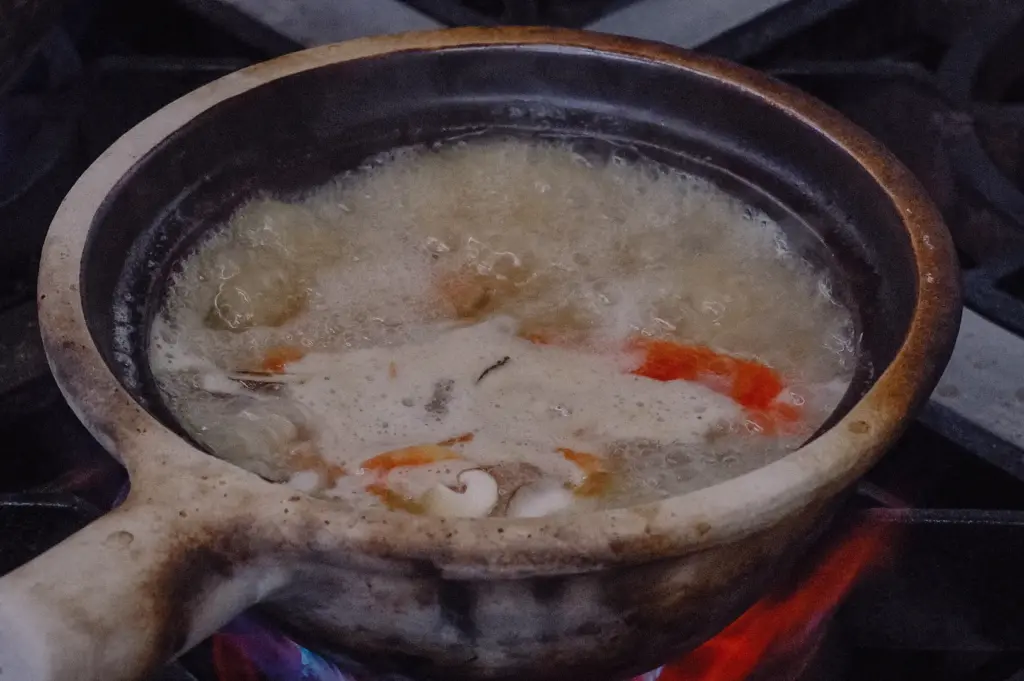
Pomfret holds up better when the broth it sits in is built to support it, not fight it.
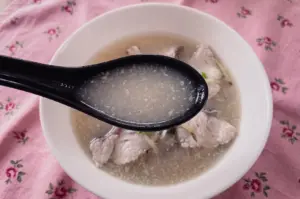
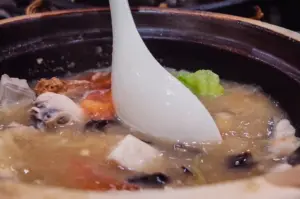
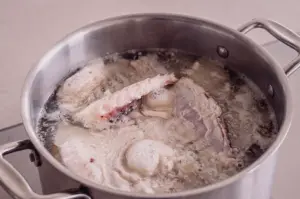
The broth here is made from batang bones simmered with chicken and tee poh, the dried sole fillet, until the collagen renders out and gives the soup its naturally milky ivory body. There's no evaporated milk and no shell base. The soup is white because the bones give everything. That rendered collagen matters for texture as much as flavour. It gives the broth a slight body that coats the fish gently rather than thrashing it about.
A broth with body carries heat more evenly, too. The pomfret cooks through without the harsh, bone-dry edges you get from a thin, boiling liquid. You can taste the difference in the fish soup at Hup Lok, where the fish stays soft and the broth stays the supporting act.
Timing and Heat, Not Force
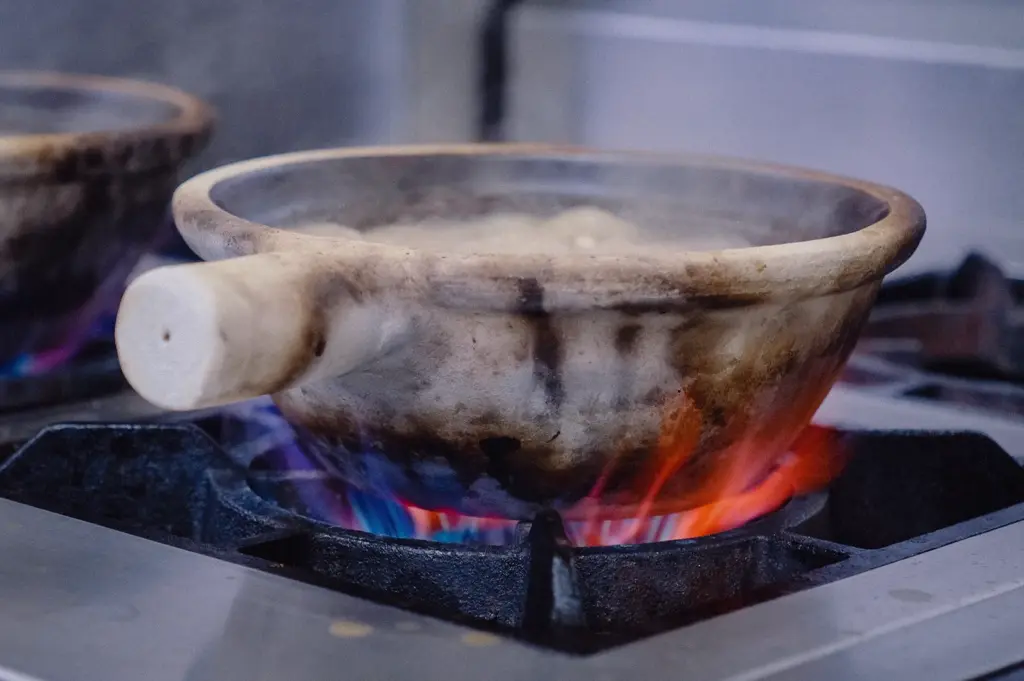
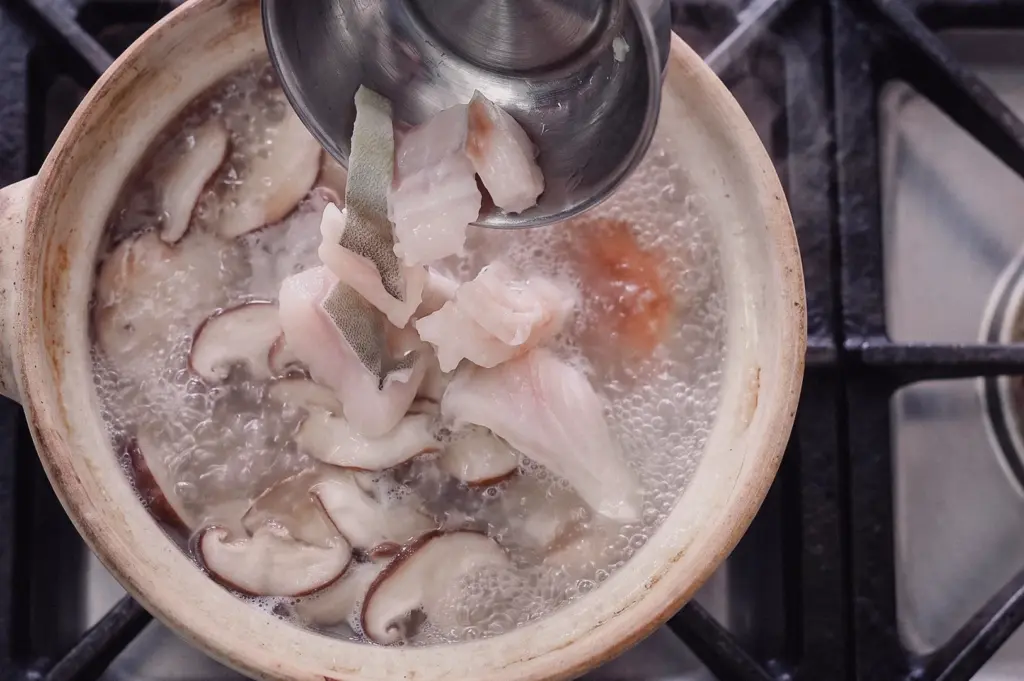
Cooking pomfret directly in broth is less about technique tricks and more about restraint.
The fish goes in at the right moment, cooked at the right heat, and pulled at the right time. Too early and it sits and toughens. Too hot and it breaks up. The kitchen controls this by watching the heat and the timing closely, the same discipline that lets the broth come out the same each service. Pomfret rewards a steady hand and punishes a rushed one.
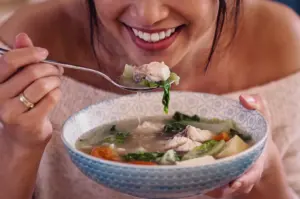
Here's the part diners can control. The broth keeps working after the bowl reaches the table. Residual heat means the fish carries on cooking in front of you, so a soft slice that sits too long will firm up on its own. Eat the pomfret early, while it's still silky. The broth can wait; the fish can't.
Why Handling Before the Pot Matters
A fish that's roughly handled before it's cooked won't hold up well, no matter how careful the kitchen is.
Soft flesh bruises and breaks easily. Pomfret that's been knocked about arrives already fragile, and no amount of gentle cooking fixes that. This is where fewer hands between the fish and the bowl helps. Hup Lok grew out of three generations working in the fish trade, from the founder's grandfather selling fish at the foot of River Valley, to the family trade at Jurong Fishery Port, now run by the founder's brother. That history means more control over how the fish is handled before it ever meets the heat. For a delicate fish, careful handling does half the work before the pot.
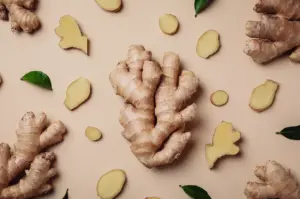
The condiments finish the bowl without crowding the fish. Sng buay (sour plum) brightens, kiam chye (salted mustard) adds a savoury edge, and julienned ginger lifts the broth. Each does one job, and none of them fight the pomfret for attention.
FAQ
Does pomfret fall apart in hot soup?
It can, if the broth is at a hard boil or the fish sits too long. Gentle heat, careful timing and good handling keep the slices whole and tender.
Why is the broth white if there's no milk?
The colour comes from collagen rendered out of batang bones simmered with chicken and tee poh. The soup is white because the bones give everything, not because anything is poured in at the end.
How should I eat pomfret in broth?
Eat the fish first, while it's still silky, then take the broth at your own pace. This is a common feature of a good traditional fish soup, and you can see the approach in Hup Lok's traditional fish soup.
Does a longer simmer make the fish better?
No. The broth itself takes about an hour, and the pomfret needs far less. More time only dries the fish out.
To taste how pomfret holds up when it's handled and cooked with care, drop by Hup Lok on Havelock Road and order Grandpa's Pomfret Soup.