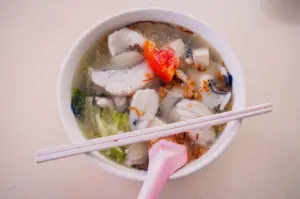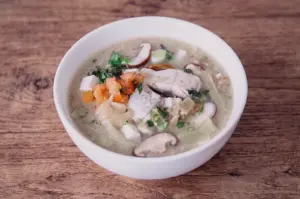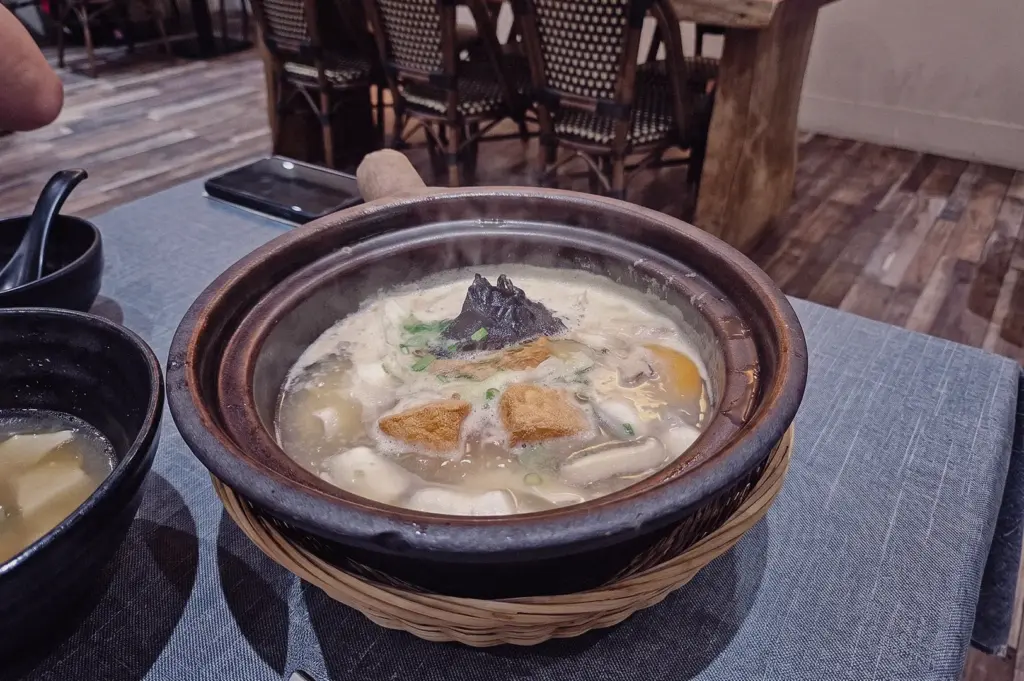
Some dishes are saved for celebrations. Others are what you want on an ordinary weeknight after a long day. Pomfret fish soup belongs in the second group. As comfort food, it works because nothing about it asks you to dress up, plan ahead or treat the meal as an event.
This guide explains why. We'll look at the broth, the fish, the condiments and the work behind them. Each one keeps the bowl closer to everyday eating than to a banquet table.
Comfort Starts with the Broth
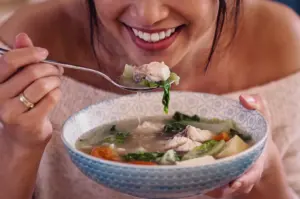
Comfort food is usually warm, filling and familiar. A good broth covers all three.
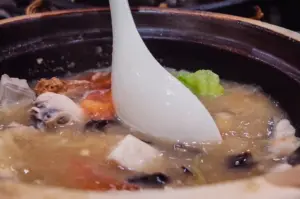
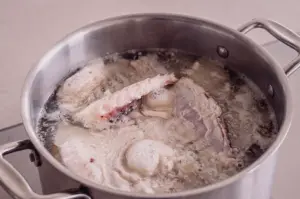
Ours is made from batang bones simmered with chicken and tee poh, the dried sole fillet. As it cooks, collagen renders out of the bones and gives the broth its naturally milky ivory body. There's no milk, no evaporated milk and no shell or siput base. The soup is white because the bones give everything.
That body is what makes the bowl satisfying. It's rich enough to fill you up without sitting heavily. If you want to find out what makes the broth different, the short answer is that it comes from the pot, not from anything poured in at the end.
A Fish that's Easy to Eat
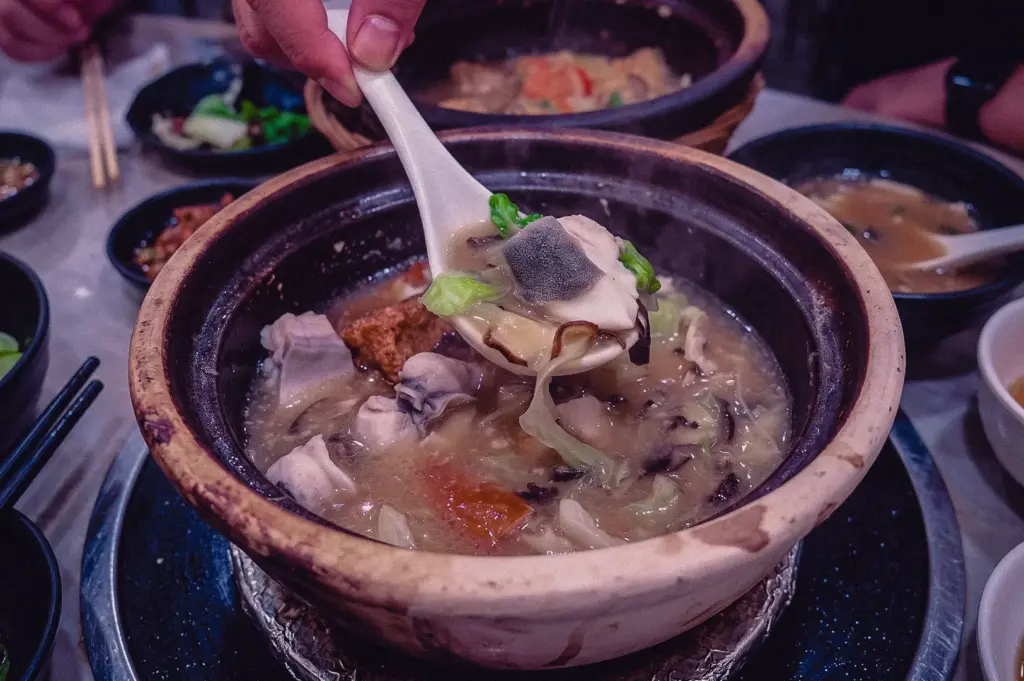
Pomfret has fine, tender flesh. Cooked well, it turns almost silky, with a mild, clean sweetness.
That softness matters in a comfort meal. You don't have to work at it. There's no strong fishy edge to get used to, and the texture suits a tired evening as well as a slow lunch.
Grandpa's Pomfret Soup, named in honour of the founder's father, is finished with generous pomfret slices. The broth supports the fish. The fish stays at the centre of the bowl.
Condiments that Let You Make It Your Own
Comfort food is often a dish you've adjusted to your own taste over time. The condiments give you that room.
- Sng buay (sour plum) adds a bright sourness that cuts through the richness.
- Kiam chye (salted mustard) brings a savoury, salted edge.
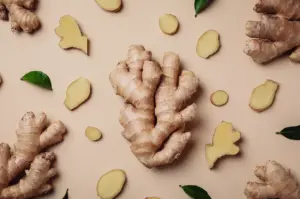
- Julienned ginger lifts the broth and keeps the fish tasting clean.
Add more of one and less of another. The base stays the same. The finish is yours.
The Same Bowl, Every Time
A comfort meal only works if it tastes the way you remember it. Consistency is what turns a good bowl into a regular one.
The founder's father made his soup without a fixed written recipe. Chef Kee Leng, who is also a partner, balanced and refined it into the version served today. He worked out the ratios, heat and timing so the kitchen can make the same bowl each service. The broth takes roughly an hour. A long simmer was never the point. Repeatability was.
Good Seafood Shouldn't Wait for an Occasion

Seafood often gets treated as something for special dinners. Part of that comes down to how many hands the fish passes through before it reaches the bowl.
Hup Lok is supplied by Hai Sia Seafood, the family business at Jurong Fishery Port, now run by the founder's brother. That means fewer hands between the fish and the bowl. The kitchen gets more control over the seafood it serves. It also helps keep good seafood within reach for an ordinary Tuesday, not just a birthday.
Three Generations Before the First Bowl
The knowledge behind the soup started long before the restaurant. The founder's grandfather hawked fish in the afternoons at the foot of Fort Canning, a pole across his shoulders. The founder's father helped from boyhood and later ran his own stall at Mei Ling market. The trade grew into Hai Sia Seafood.
The restaurant is new. The family's knowledge of fish is not. That's what sits behind seafood dining at Hup Lok: a familiar bowl, with serious work underneath it.
FAQ
What makes pomfret fish soup comfort food rather than occasion food?
It's warm, filling and easy to eat. The fish is soft and mild, the condiments let you adjust each spoonful, and the bowl tastes the same each visit. It's an everyday dish, not a showpiece.
Is the broth made with milk?
No. The milky ivory colour comes from collagen rendered out of batang bones simmered with chicken and tee poh. There's no milk or evaporated milk in it.
Is pomfret soup always made the same way?
No. Different kitchens make pomfret soup in different styles. If you'd like to compare them, you can read about can pomfret be used for both clear and milky fish soup in our journal.
What's the best way to eat it?
Start with the pomfret while it's still silky. The hot broth keeps cooking the fish in the bowl. The broth can wait.
The Short Version
Pomfret fish soup works as comfort food because it asks very little of you. The broth is rich without being heavy. The fish is soft and generous. The condiments are yours to adjust, and the bowl stays the same from one visit to the next.
Next time you want an ordinary meal done well, come by Hup Lok on Havelock Road and order a bowl of Grandpa's Pomfret Soup.