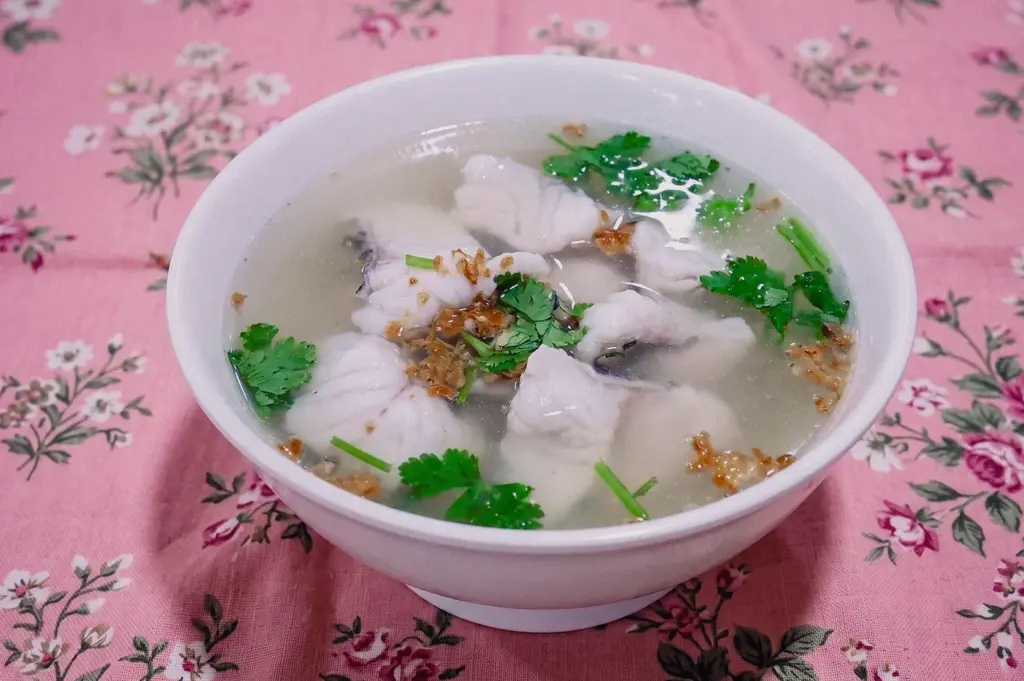
A bowl of clear fish soup looks simple. There's a pale, see-through broth, a few slices of fish and not much else. That simplicity is exactly what makes it hard. If you've been searching for how to make clear fish soup, the short answer is that clarity comes from control, not from any single ingredient.
This guide explains what makes a broth turn cloudy, how cooks keep it clear and why getting it right every time takes more discipline than most people expect. We'll also explain why our own broth goes the other way.
What Clarity Actually Means
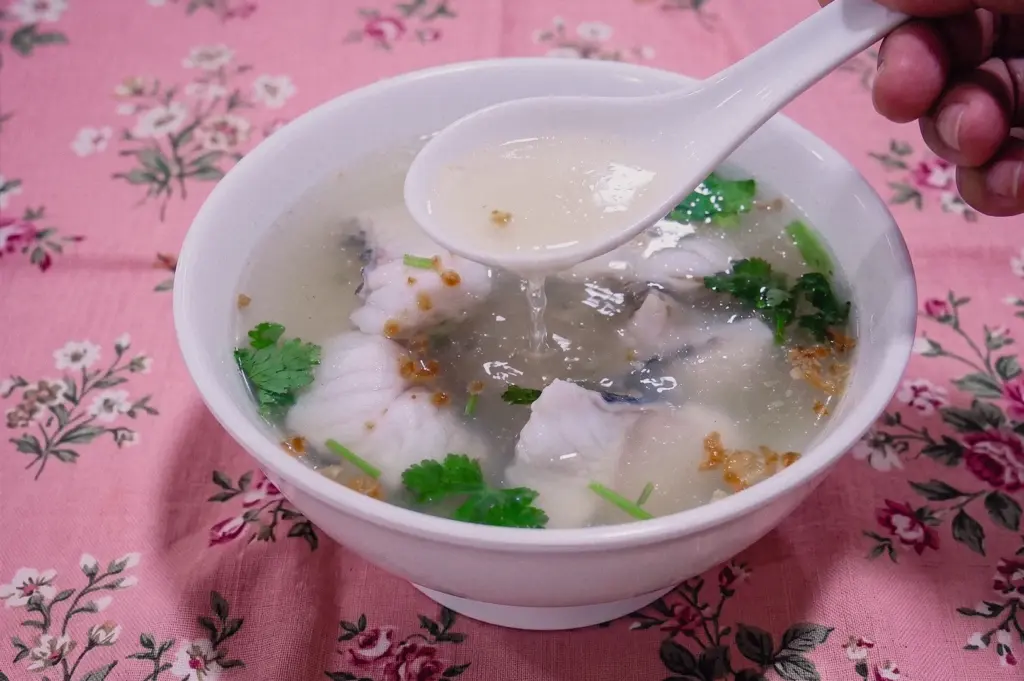
A clear broth is one where light passes straight through. Nothing is suspended in the liquid. No fat droplets, no loose proteins, no fine particles from bones or flesh.
That sounds easy to achieve. In practice, almost everything that happens in a pot of fish works against it. Fish is delicate, and it gives up its proteins and fat quickly. Clarity is a fight against the fish's own nature.
What Turns a Broth Cloudy
Three things cause most cloudiness.
Hard boiling. When a broth boils hard, the movement breaks fat into tiny droplets. Those droplets mix into the liquid and stay there. This is called emulsification. The broth turns opaque, and no amount of straining will undo it.
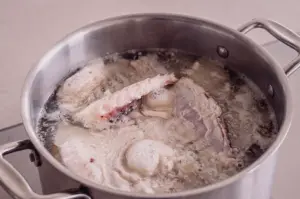
Blood and impurities. Bones and trimmings carry blood and loose proteins. As they heat, these set into grey scum. Left in the pot, the scum breaks apart and clouds the liquid.
Agitation. Stirring, pressing the bones or tipping the pot too roughly all stir up fine particles. Each one muddies the broth a little more.
None of these is a dramatic mistake. That's the difficulty. Small lapses add up.
How Cooks Keep a Broth Clear
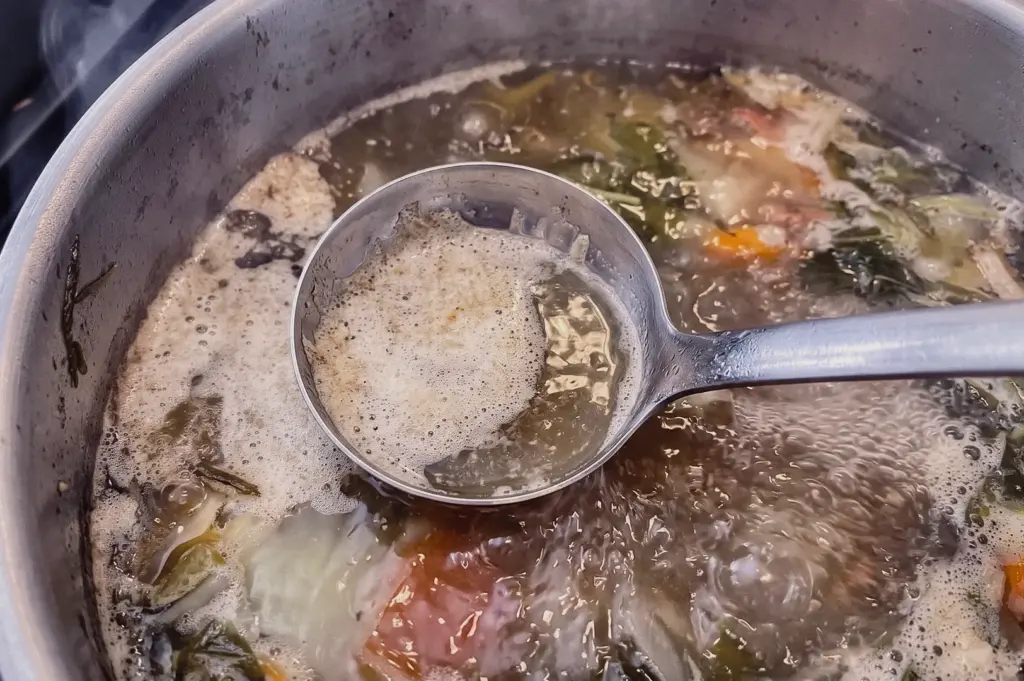
The technique for a clear fish broth is mostly about restraint.
- Clean the bones first. Cooks rinse fish bones well and often blanch them briefly, then discard that first water. This removes much of the blood and surface protein before the real cooking starts. It's an extra step. It saves the broth.
- Start cold, heat slowly. Bringing the pot up gently gives the proteins time to gather and rise to the surface. A sudden rush of heat scatters them instead.
- Skim, and keep skimming. As scum rises, it has to be lifted off. Not once, but repeatedly. Missing it for a few minutes can be enough.
- Hold a bare simmer. The surface should barely move. A few small bubbles are fine. A rolling boil is not. This is the single most important rule.
- Don't stir. Leave the bones alone. Let the liquid do its work.
- Strain gently. At the end, the broth is ladled or poured through a fine sieve or cloth. Pressing the solids pushes cloudiness back in. Patience matters right to the last step.
If you're working out which part of this process makes a stock and which makes a soup, you can read about what is the difference between fish stock and fish soup in our journal.
Why Consistency is the Real Test
Making one clear broth is achievable. Making the same clear broth every service is much harder.
Every variable shifts. Bones differ from batch to batch. A stove runs slightly hotter on a busy night. A cook gets pulled away and the simmer creeps into a boil. Any of these can tip the broth from clear to cloudy, and once it's cloudy, it stays that way. Clarity forgives nothing.
This is why consistency matters more than any single good pot. A kitchen needs fixed ratios, steady heat and set timing, so the result doesn't depend on luck.
Why Our Broth Goes the Other Way
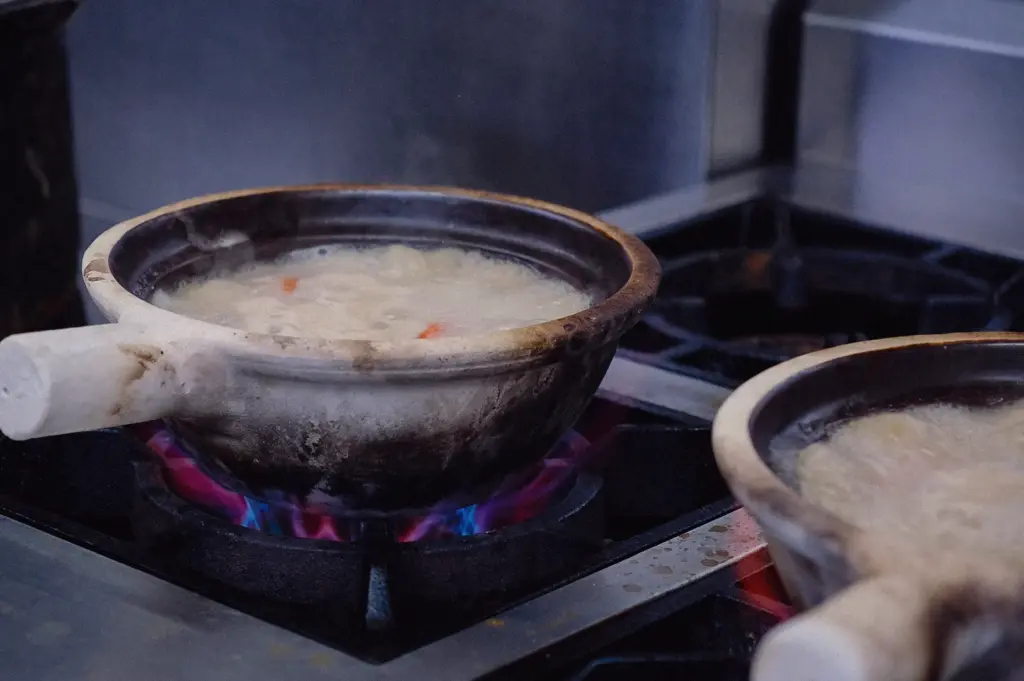
We don't make a clear broth. Our broth is milky ivory on purpose.
It's made from batang bones simmered with chicken and tee poh, the dried sole fillet. As it cooks, collagen renders out of the bones and gives the broth its body and colour. There's no evaporated milk and no shell or siput base. The soup is white because the bones give everything.
The discipline is the same, just aimed at a different result. Our broth takes roughly an hour. The founder's father made his soup without a fixed written recipe. Chef Kee Leng, who is also a partner, balanced and refined it, working out the ratios, heat and timing so the kitchen can make the same bowl each service. A clear-broth cook and a milky-broth cook share one goal. The bowl should taste the same tomorrow as it did today.
That broth supports the fish rather than covering it. Grandpa's Pomfret Soup, named in honour of the founder's father, is finished with generous pomfret slices, sng buay (sour plum), kiam chye (salted mustard) and julienned ginger. Hup Lok's generous portions of pomfret keep the fish at the centre of the bowl.
Knowing Fish Before Cooking It
Good broth of any style starts with knowing the fish. The founder's grandfather hawked fish at the foot of Fort Canning in the afternoons, a pole across his shoulders. The founder's father helped from boyhood and later ran his own stall at Mei Ling market. The trade grew into Hai Sia Seafood at Jurong Fishery Port, now run by the founder's brother.
Hai Sia Seafood supplies our kitchen today. Fewer hands between the fish and the bowl give us more control over what goes into the pot. The restaurant is new. The family's knowledge of fish is not.
Key Takeaways
- Hard boiling emulsifies fat and turns a broth cloudy.
- Rinsing or blanching bones removes blood and loose proteins early.
- A slow start, constant skimming and a bare simmer keep the liquid clear.
- Stirring and pressing undo good work.
- Consistency, not a single good pot, is the real measure of skill.
Clear and milky broths ask for the same care in different directions. To taste the milky side for yourself, come by Hup Lok on Havelock Road and order a bowl of Hup Lok's fish soup. Try the broth on its own before you add the sour plum.