Some dish names are marketing. This one isn't. Grandpa's Pomfret Soup is named in honour of the founder's father, and the name points back at a real person who spent his life around fish. If you've wondered about the story behind the Grandpa's Pomfret Soup name, it's simpler and more honest than most origin tales. It's a son naming a bowl after the man who taught him what good fish looks like.
This guide tells that story plainly. You'll learn who the name honours, why the family earned the right to make this soup, and what actually goes into the bowl that carries his name.
The Man the Name Honours
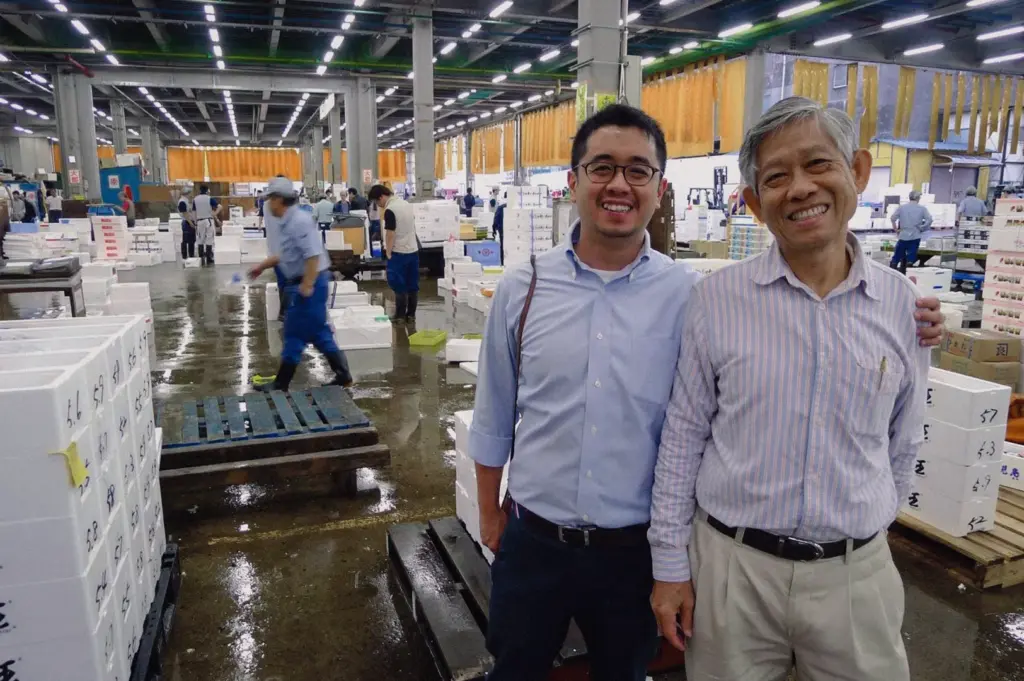
The "Grandpa" in the name is the founder's father. He didn't run a famous kitchen. He worked with fish, the way his own father did before him.
The family's story with fish starts a generation earlier. The founder's grandfather was up before dawn, then out in the afternoon hawking fish at the foot of River Valley, a pole across his shoulders. The founder's father helped from boyhood. Later he became a stallholder at Mei Ling market, and over time the family trade grew through a small factory in Redhill into Hai Sia Seafood at Jurong Fishery Port, now run by the founder's brother.
That's three generations working with fish, not three generations of restaurant heritage. The difference matters. The name doesn't borrow prestige it hasn't earned. It points at real work, done early in the morning, over a long time. If you want to discover the family behind the restaurant, the name is the shortest version of that history.
Why Name a Soup After Him
A name can be a decoration. This one is a record of where the soup came from.
The founder's father made a pomfret soup. It had no fixed written recipe. It was the kind of cooking that lives in a person's hands rather than on paper, adjusted by feel each time. When the family opened Hup Lok, they wanted the signature dish to carry his name because the bowl is closest to his cooking.
But here's the honest part. A dish made by feel can't be served the same way twice, and a restaurant needs a bowl that comes out right every service. So the soup wasn't simply copied and put on a menu. That would have been a nice story and an unreliable bowl.
From a Father's Cooking to a Bowl You Can Order
This is where the name stays honest instead of turning into a myth.
Chef Kee Leng, who is also a partner, took the father's soup and balanced it into the version served today. He worked out the ratios, the heat and the timing, so the kitchen can reproduce the same bowl each service. It isn't a secret recipe. It isn't an old formula passed down unchanged. It's a father's cooking, understood and made repeatable by someone who knew what to protect.
The important point isn't a long, slow simmer. The broth takes some time, not a full day. What makes it consistent is discipline around timing, not marathon cooking. So the name honours the man, and the kitchen honours the name by getting the same bowl right every time.
What Goes Into the Bowl that Carries His Name
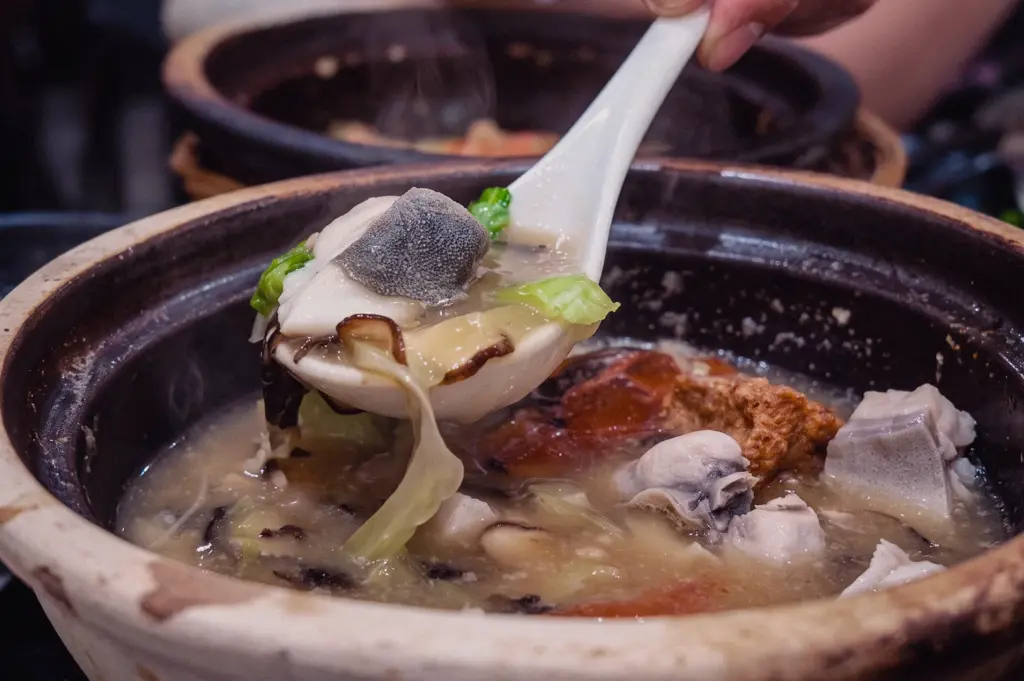
A name only earns respect if the food behind it is good. Here's what's actually in it.
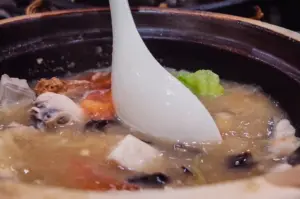
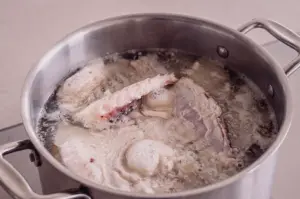
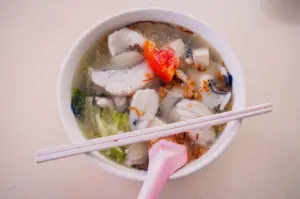
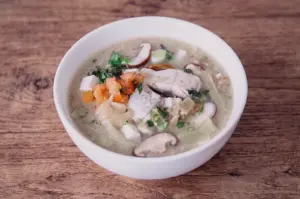
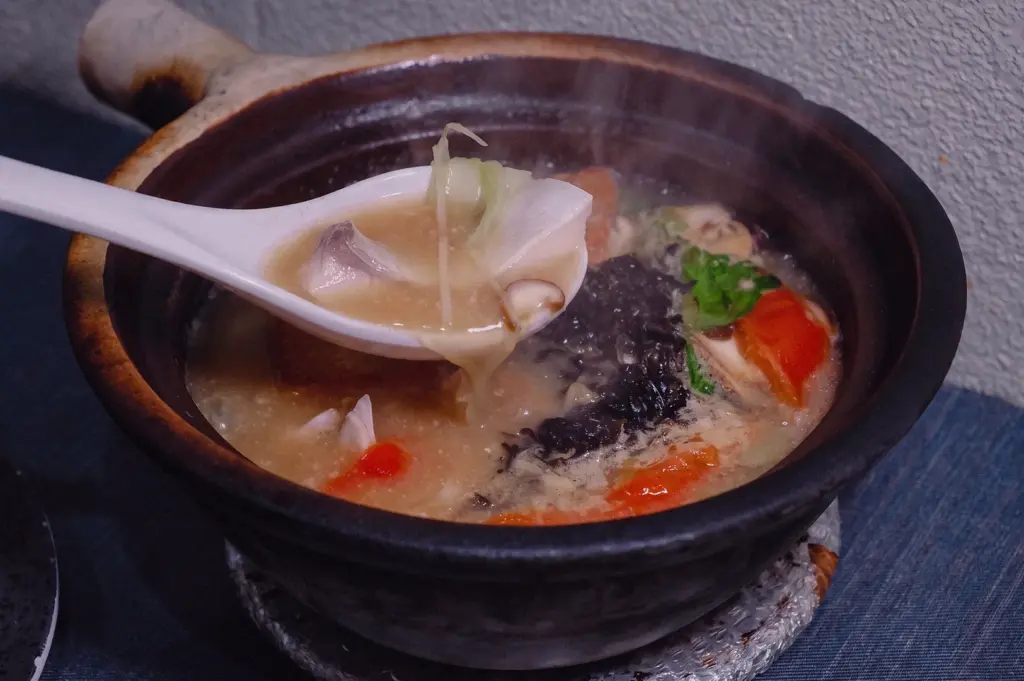
The broth is made from batang bones simmered with chicken and tee poh, the dried sole fillet, until the collagen gives it a naturally milky ivory body. There's no evaporated milk and no shell base. The soup is white because the bones give everything. That whiteness is rendered collagen, not something poured in at the end.
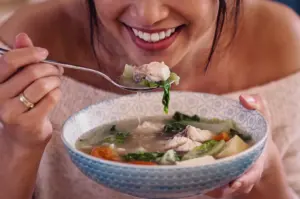
The bowl is finished the Teochew way, with generous pomfret slices and three simple condiments:
- Sng buay (sour plum) to brighten the broth
- Kiam chye (salted mustard) for a savoury edge
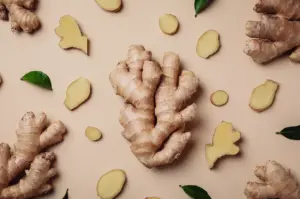
- Julienned ginger to lift the whole bowl
Each does one job. None of them crowd the fish. Pomfret has fine, tender flesh that flakes apart gently and turns almost silky when it's cooked right, with a mild, clean sweetness. The condiments frame that sweetness rather than fighting it. The fish stays the centre of the bowl, which is the point.
The Knowledge Behind the Name
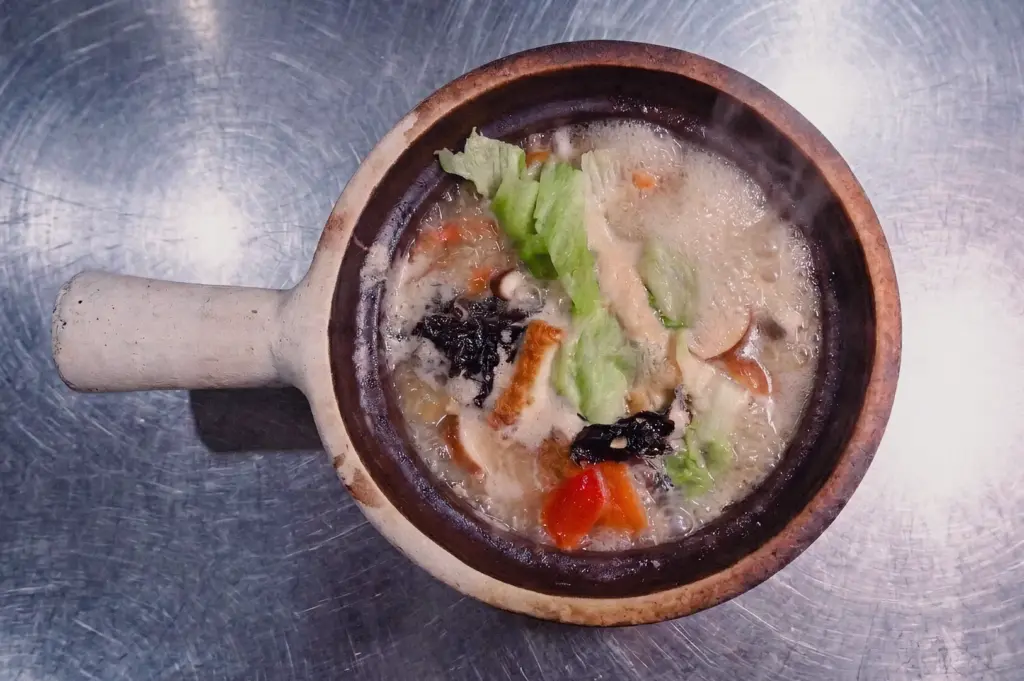
You can taste care in a bowl. You can't always see where it comes from.
The family's years in the fish trade mean fewer hands between the fish and the bowl, and more control over how the seafood is handled. For a soft fish like pomfret, that handling does half the work before the heat is even on. A name is only as good as the knowledge behind it, and this one has three generations behind it. You can see how the same thinking runs through the rest of Hup Lok's full menu, where familiar dishes hide serious work underneath.
So the name isn't a flourish. It's a father, a family that knows fish, and a bowl made to do him justice.
To taste the soup that carries his name, drop by Hup Lok on Havelock Road, order Grandpa's Pomfret Soup, and eat the fish first while it's still silky.