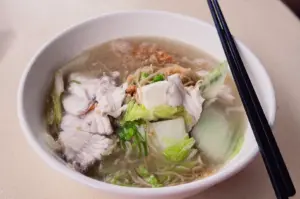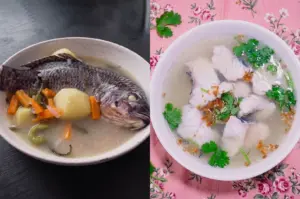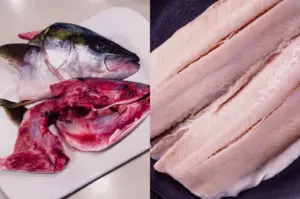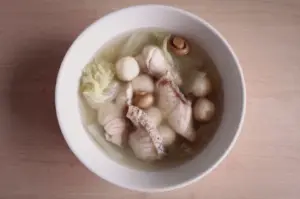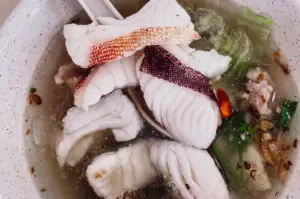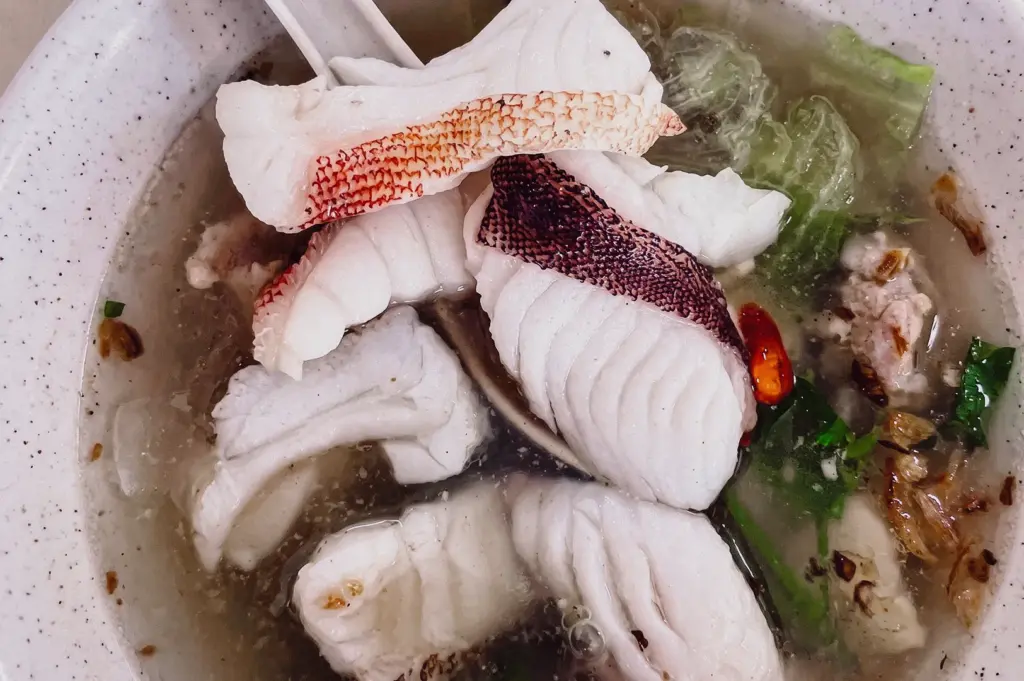
Grouper fish soup is easy to recognise once you know what to look for. The slices are thick and firm, with a slight spring when you bite. The skin turns soft and gelatinous in the heat. That texture is the reason people order it.
This guide explains what makes grouper fish soup different. It covers how grouper behaves in broth, how it compares with pomfret and batang, and which kinds of bowl suit it best. If you want to see why we went a different way, you can discover how the menu came together on our homepage.
In short:
- Grouper is firm and slightly springy, and its skin becomes gelatinous when cooked.
- It holds its shape through longer cooking.
- It suits richer, heartier soups more than gentle, finished broths.
What Grouper Brings to Soup
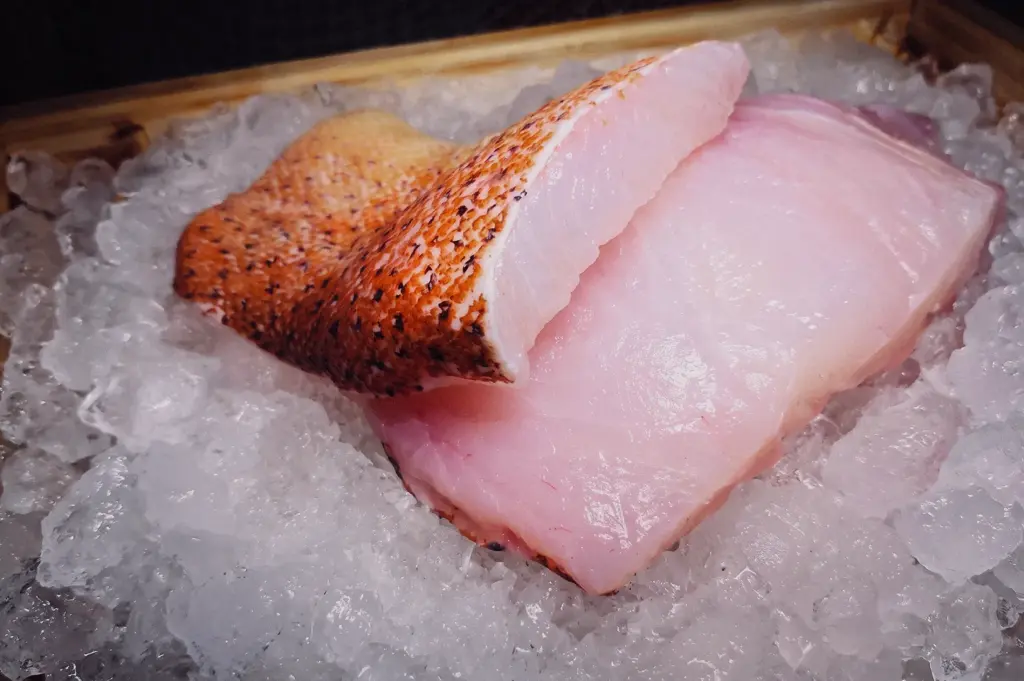
Grouper's appeal is mostly texture. The flavour is moderate and savoury.
The flesh is dense, with a slight bounce that softer fish do not have. A slice feels substantial in the mouth. It is a fish you chew.
The skin is the other half of the story. When it cooks, it turns soft and gelatinous rather than crisp or rubbery. Many people consider the skin the best part.
Size changes texture as well. If you want to go further, read about "does fish size affect its texture in soup" in our separate guide.
How Grouper Behaves in Broth
Grouper is forgiving in the pot. It can stay in hot liquid without falling apart.
That firmness makes it practical for claypots and soups that simmer for a while. The slices keep their shape through stirring and ladling. A few extra minutes will not ruin it.
The trade-off is sweetness. Grouper's natural sweetness is milder than pomfret's, so the broth has to carry more of the flavour. A grouper soup is often built around a strong, savoury base.
Grouper vs. Pomfret vs. Batang
Each of the three fish does a different job in a bowl.
| Grouper | Pomfret | Batang | |
|---|---|---|---|
| Texture | Firm, slightly springy | Fine, soft | Dense, meaty |
| Skin | Gelatinous when cooked | Delicate | Firm |
| Sweetness | Moderate | High | Moderate |
| Firmness in broth | Firm | Delicate | Very firm |
| Best role | Hearty soups and claypots | Centre of a finished bowl | Slices or broth-building |
Grouper and batang both handle heat well. Pomfret needs a gentler hand.
Grouper sits between the other two. It is springier than batang and far firmer than pomfret. Its skin adds a texture neither of the others gives.
Which Bowl Suits Grouper?
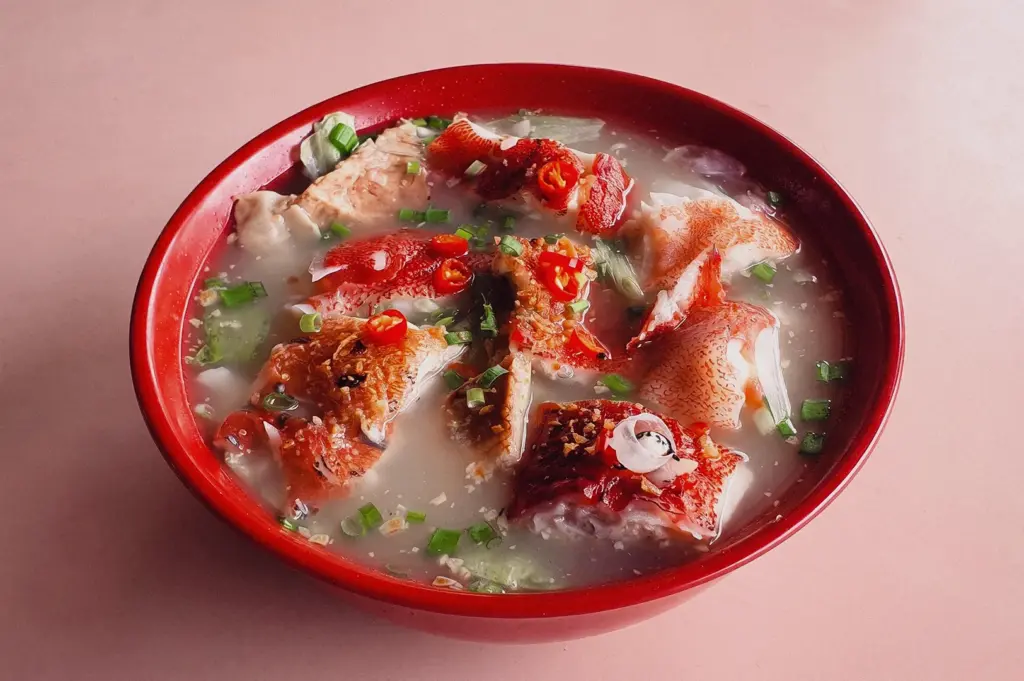
Grouper works best where the soup is rich and the cooking is long. Cantonese-style soups and claypots are a natural fit. The fish holds up, and the broth supplies the depth.
It suits a finished, gentle broth less well. In that kind of bowl, the fish has to bring sweetness. Grouper's strength is texture, not sweetness.
So the right question is what the broth needs. Choose grouper when you want bite. Choose a softer fish when you want sweetness.
Where Our Bowl Sits
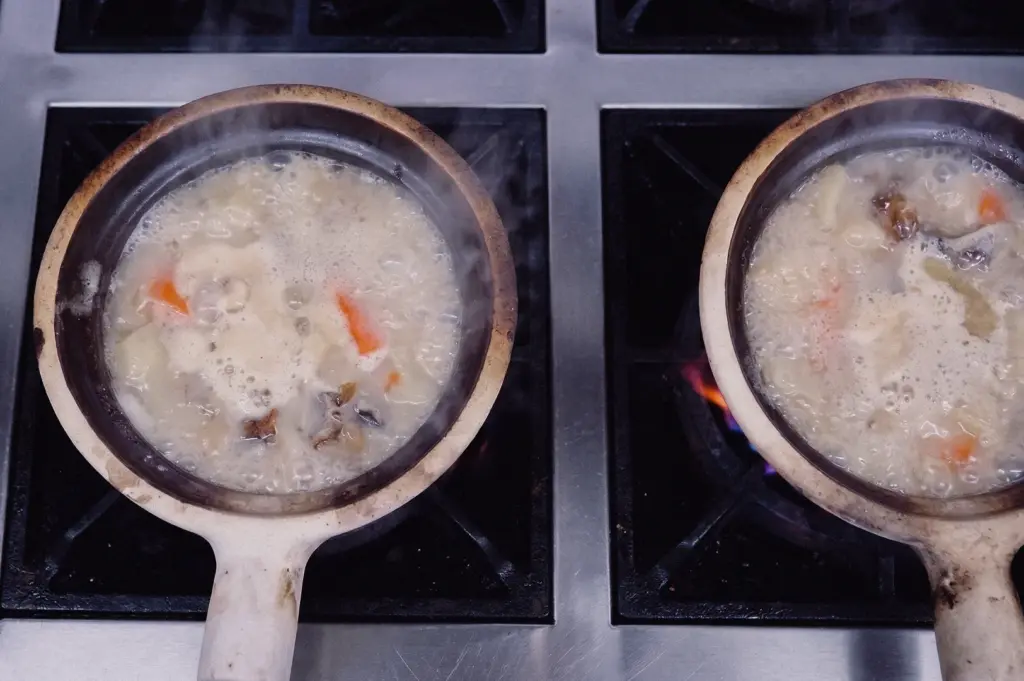
Our broth starts with batang bones, simmered with chicken and tee poh, the dried sole fillet. The bones and chicken build the base. The tee poh adds depth from dried fish.
The collagen from the bones gives the broth its naturally milky ivory body. There is no evaporated milk and no shell or siput base. The soup is white because the bones give everything.
A broth with that much body does not need a firm fish to stand up in it. It needs a fish that adds sweetness. That is why Grandpa's Pomfret Soup, named in honour of the founder's father, is finished with generous pomfret slices, sng buay (sour plum), kiam chye (salted mustard) and julienned ginger. The pomfret stays at the centre of the bowl.
Knowing the Fish
The founder's grandfather worked at the market before dawn, then hawked fish at the foot of Fort Canning in the afternoons, a pole across his shoulders. The founder's father helped from boyhood and later became a stallholder at Mei Ling market. The trade grew through a small factory in Redhill into Hai Sia Seafood at Jurong Fishery Port, now run by the founder's brother.
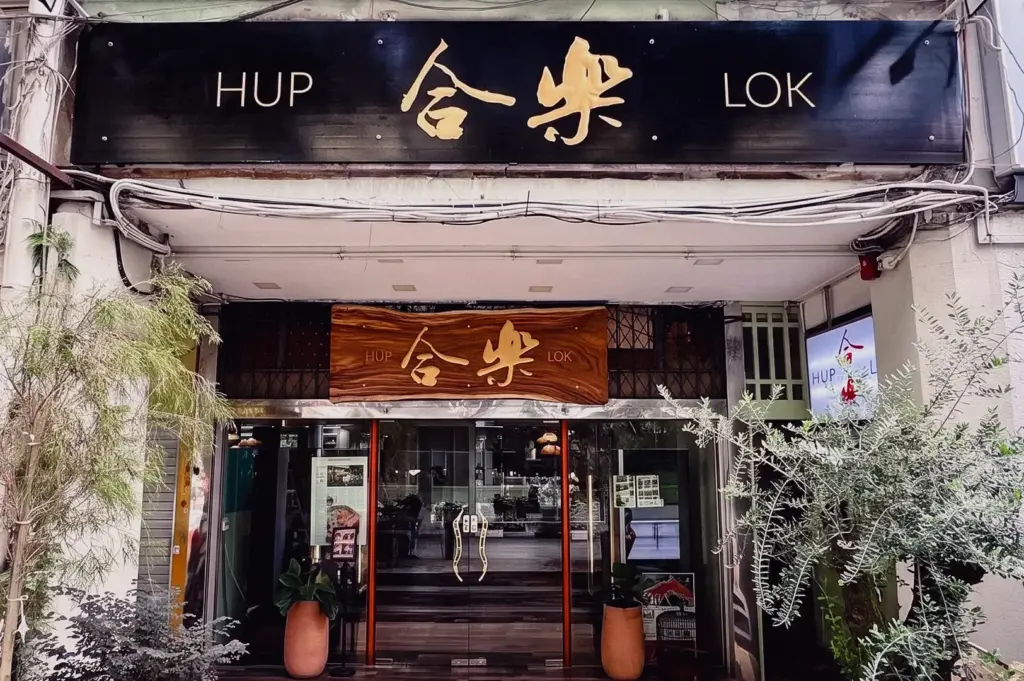
Hai Sia Seafood supplies our kitchen today, so fewer hands sit between the fish and the bowl. That gives us more control over what we buy and how it is handled. The same thinking runs through Hup Lok's seafood menu, from Signature Prawn Noodles to Alaskan King Crab Bee Hoon. The restaurant is new. The family's knowledge of fish is not.
Key Takeaways
- Grouper is firm and slightly springy, with skin that turns gelatinous when cooked.
- It handles longer cooking well and suits hearty soups and claypots.
- Its sweetness is milder than pomfret's, so the broth does more of the work.
- Pomfret suits a rich, finished broth where sweetness matters most.
- Batang is very firm and also useful for building a broth.
Next time you are on Havelock Road, order Grandpa's Pomfret Soup. If you usually eat grouper, notice how a softer, sweeter fish changes the bowl.