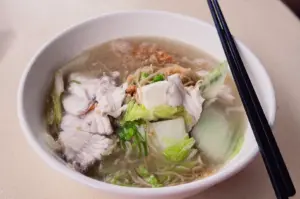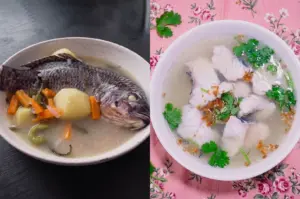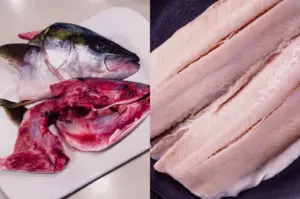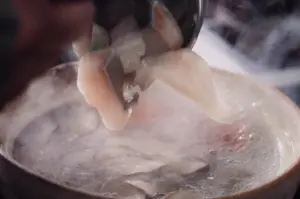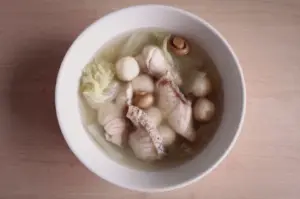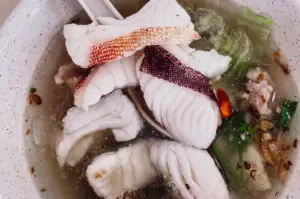
Ask five fishmongers which fish is best for fish soup and you may get five answers. Each one will be right for a different bowl. The best fish depends on the broth you are making and the texture you want to eat.
This guide compares the most common fish used in Singapore fish soup by texture, natural sweetness, firmness in broth and how each behaves when simmered. Oily fish raise their own questions, and you can read more on oily fish fish soup in a separate guide. In short:
- Firm fish hold their shape and suit longer cooking.
- Delicate fish give more sweetness but need a gentle hand.
- The broth decides which fish fits, not the other way round.
The Four Things that Matter
Before comparing fish, it helps to know what you are judging.
- Texture. This is how the flesh feels in the mouth, from fine and soft to dense and meaty.
- Natural sweetness. Some fish carry a clean, sweet taste that comes through in a simple broth.
- Firmness in broth. Some slices stay whole in hot liquid. Others break apart.
- Behaviour when simmered. This covers how the fish changes with time and heat, and what it gives to the liquid.
No fish wins on all four. Every choice is a trade-off.
Comparing Common Fish Soup Choices
| Fish | Texture | Sweetness | Firmness in broth | Best use |
|---|---|---|---|---|
| Pomfret | Fine, soft | High | Delicate | Short time in a ready broth |
| Batang | Dense, meaty | Moderate | Very firm | Slices and broth-making |
| Snapper | Firm, large flakes | Mild | Firm | Everyday sliced fish soup |
| Grouper | Firm, slightly springy | Moderate | Firm | Richer, Cantonese-style soups |
Pomfret
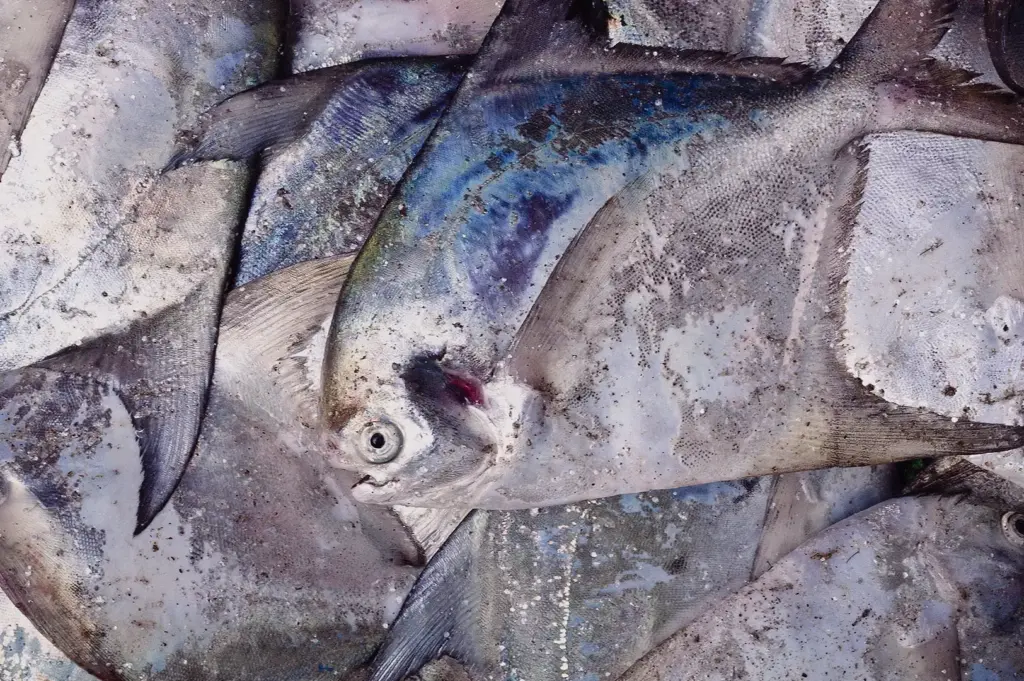
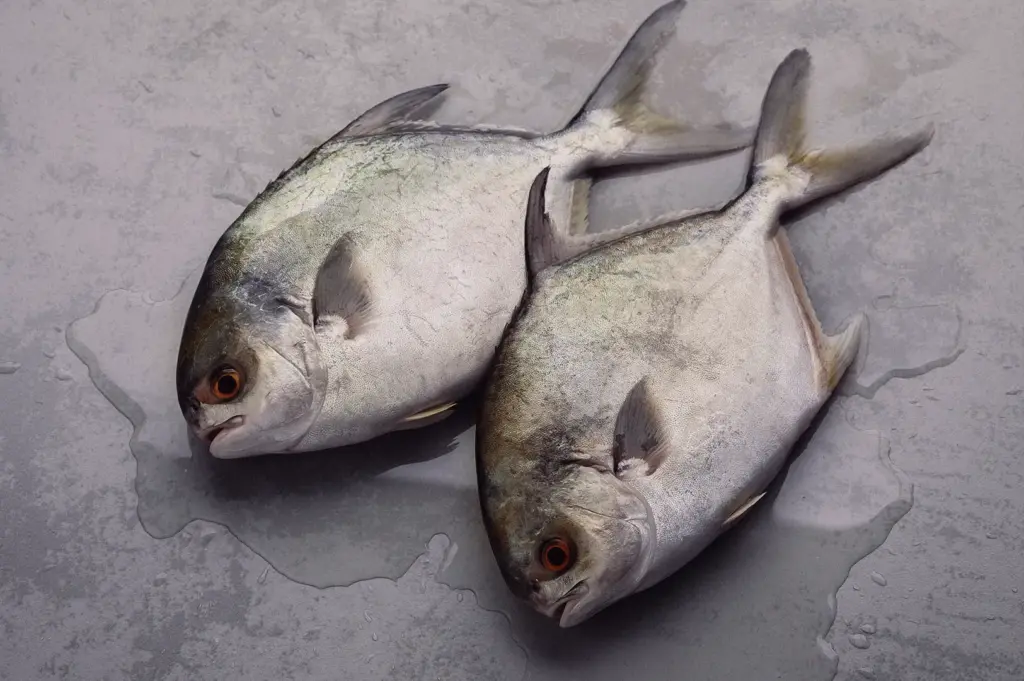
Pomfret has fine, soft flesh with a clean, natural sweetness. It is the fish Teochew cooks have long turned to for steaming and soup. The trade-off is delicacy. Left too long in hot liquid, pomfret turns soft and loses its shape. It suits a broth that is already finished, where the fish only needs a short time in the heat.
Batang (Spanish mackerel)
Batang is the fish many Singaporeans picture when they think of a sliced fish soup stall. The flesh is dense and meaty, and the slices hold together well. It has a richer, fuller flavour than pomfret, with less obvious sweetness. Its bones are useful too. They give body to a broth when simmered.
Snapper
Snapper is firm and mild, with flesh that breaks into large, clean flakes. It stands up to heat without falling apart. It is a forgiving choice for home cooks. The sweetness is gentler, so the broth has to do more of the work.
Grouper
Grouper has firm, slightly springy flesh and skin that turns gelatinous when cooked. It is common in Cantonese-style soups and claypots. It holds up well to longer cooking. Its texture makes it feel substantial in the bowl.
So Which Fish is Best?
There is no single answer. Firm fish such as batang, snapper and grouper are practical for long cooking and busy kitchens. Pomfret asks for more care, but it rewards that care with sweetness and a fine texture.
The better question is what the broth needs. A thin broth needs a fish that brings flavour. A rich broth needs a fish that can sit inside it without being lost.
Why We Chose Pomfret
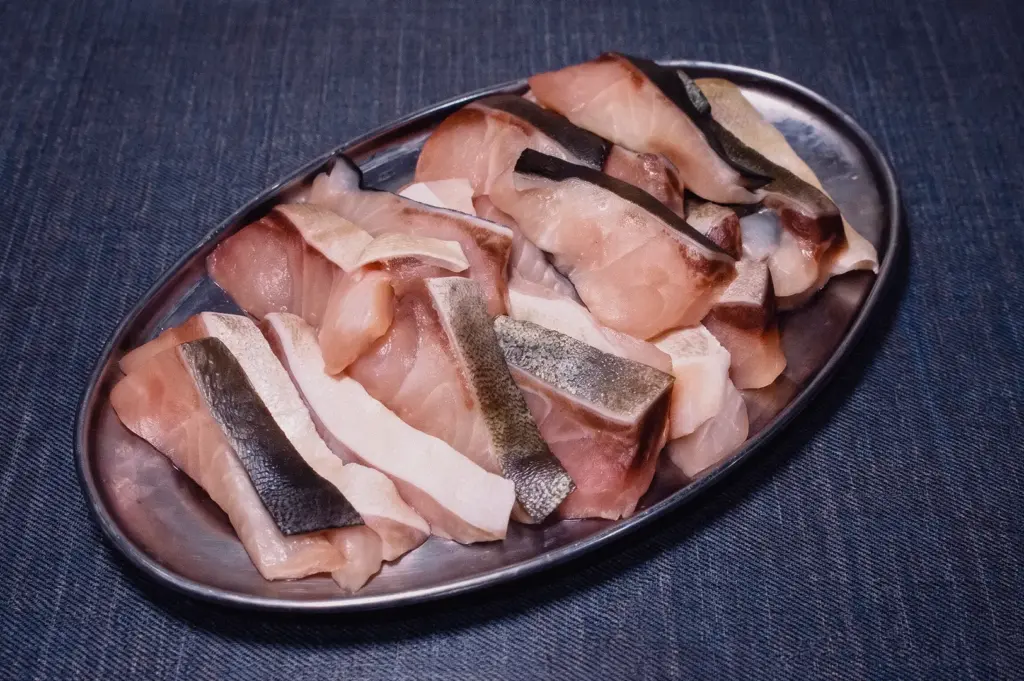
Here is Hup Lok's take on fish soup, and why we use more than one fish in the same bowl.
Our broth starts with batang bones, simmered with chicken and tee poh, the dried sole fillet. The batang bones and chicken give the base. The tee poh adds depth from dried fish. The collagen from the bones gives the broth its naturally milky ivory body. There is no evaporated milk and no shell or siput base. The soup is white because the bones give everything.
That kind of broth already has body and depth. It does not need a fish to carry it. It needs a fish that adds sweetness and a softer texture on top. Pomfret does that job. Batang builds the broth, and pomfret sits at the centre of the bowl.
The broth takes roughly one hour. The founder's father made his soup without a fixed written recipe. Chef Kee Leng, who is also a partner, balanced and refined it into the version we serve today. He set the ratios, heat and timing so the kitchen makes the same bowl each service.
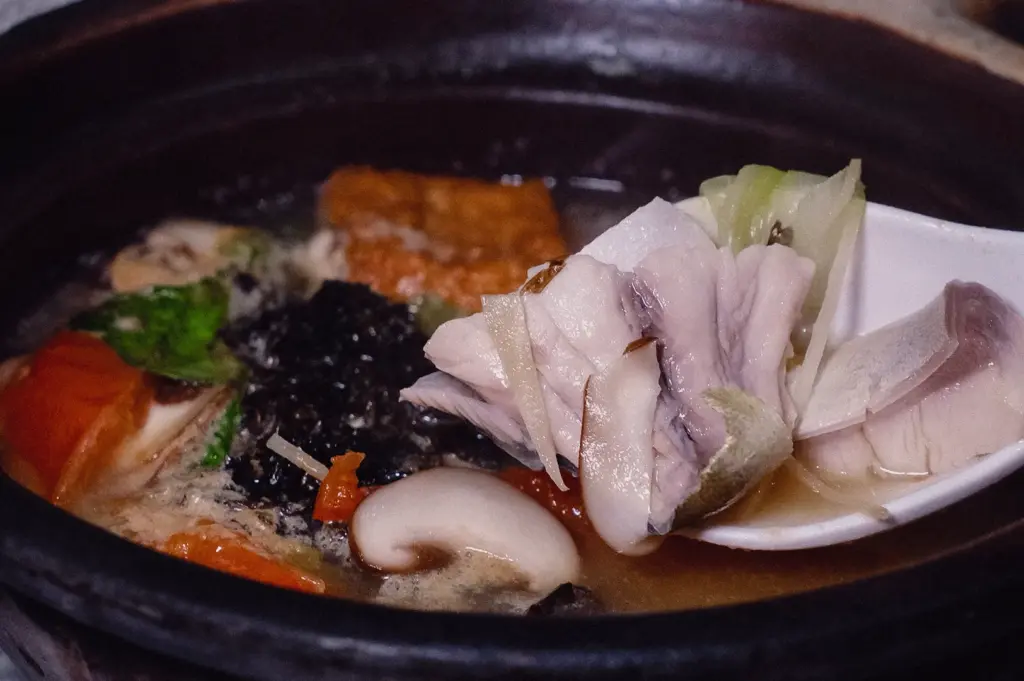
Grandpa's Pomfret Soup, named in honour of the founder's father, is finished with generous pomfret slices, sng buay (sour plum), kiam chye (salted mustard) and julienned ginger. The sour plum cuts the richness. The salted mustard adds a salty edge. The ginger brings sharpness. The pomfret stays the point of the bowl.
Knowing the Fish Comes First
Choosing a fish is only half the work. Knowing how it was bought and handled matters just as much.
The founder's grandfather worked at the market before dawn, then hawked fish at the foot of Fort Canning in the afternoons, a pole across his shoulders. The founder's father helped from boyhood and later became a stallholder at Mei Ling market. The trade grew through a small factory in Redhill into Hai Sia Seafood at Jurong Fishery Port, now run by the founder's brother.
Hai Sia Seafood supplies our kitchen today. Fewer hands sit between the fish and the bowl, which gives us more control over quality. It also helps keep good seafood within reach for everyday eating. Most lists of Fish Soup Singapore spots compare stalls. We would rather you compare the fish. You can find out more about Fish Soup Singapore done our way on our homepage. The restaurant is new. The family's knowledge of fish is not.
Key Takeaways
- Batang, snapper and grouper are firm and handle longer cooking well.
- Pomfret is softer and sweeter, and it needs a gentle hand.
- A thin broth needs a fish with flavour. A rich broth needs a fish that adds sweetness without being lost.
- Batang bones can build the broth while another fish takes the centre.
- Good handling matters as much as the choice of fish.
Next time you are on Havelock Road, order Grandpa's Pomfret Soup. Try a slice of pomfret on its own before you add the condiments, and notice how it differs from the firmer fish you may be used to.