Two pots can start with the same bones and end up tasting nothing alike. The difference is often the aromatics. A few slices of ginger or a handful of dried mushrooms can push a broth in a completely different direction.
This guide explains how aromatics in fish soup broth shift the final profile. It covers what aromatics actually do, how timing changes their effect, and how a few common choices behave. By the end, you will know how to pick aromatics that support the fish rather than compete with it.
We will also show how this works in our own bowl, Grandpa's Pomfret Fish Soup at Hup Lok. Aromatics affect smell as much as taste. A common question is how should fish soup broth smell, and we answer it in a separate guide.
What Aromatics Do in Fish Soup Broth
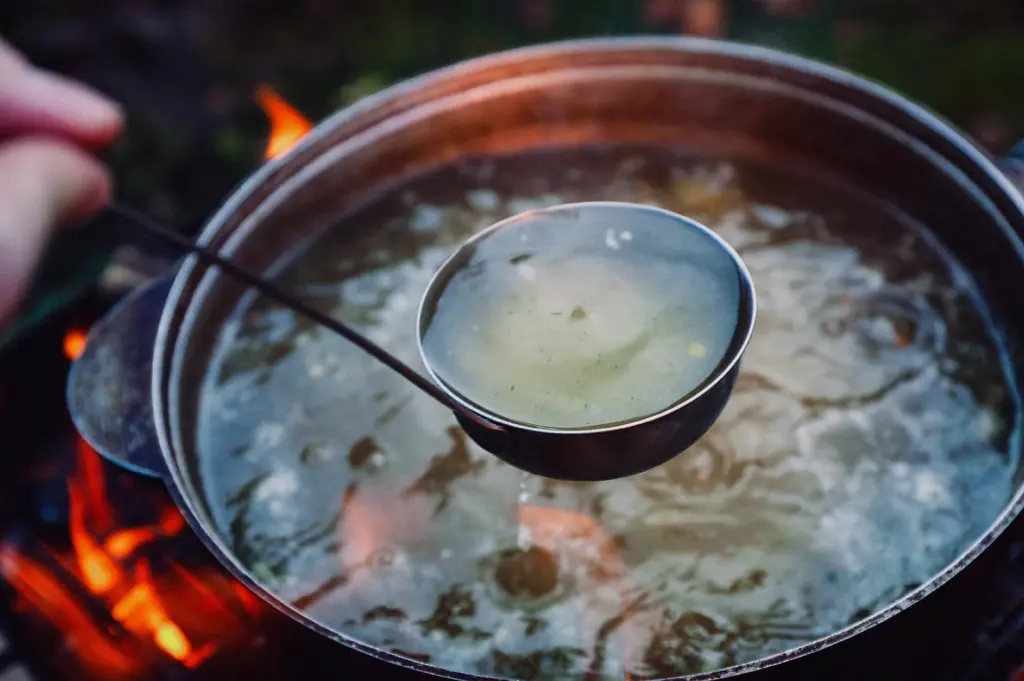
An aromatic is any ingredient added mainly for scent and character rather than bulk. It does one of three jobs.
- Lifts. Sharp aromatics such as ginger make a rich broth feel lighter on the palate.
- Deepens. Dried ingredients add savoury weight that bones alone may not give.
- Contrasts. Sour or salty elements give richness something to push against.
Most broths need more than one of these. A broth with only depth tastes heavy, and a broth with only lift tastes thin. Balance comes from the mix.
Timing Changes Everything
The same aromatic behaves differently depending on when it goes in.
In the Pot
Aromatics simmered with the bones release their flavour slowly into the liquid. Their edges soften, and they become part of the base. You taste them as depth rather than as a separate note.
At the Finish
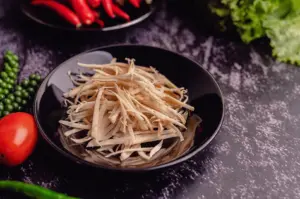
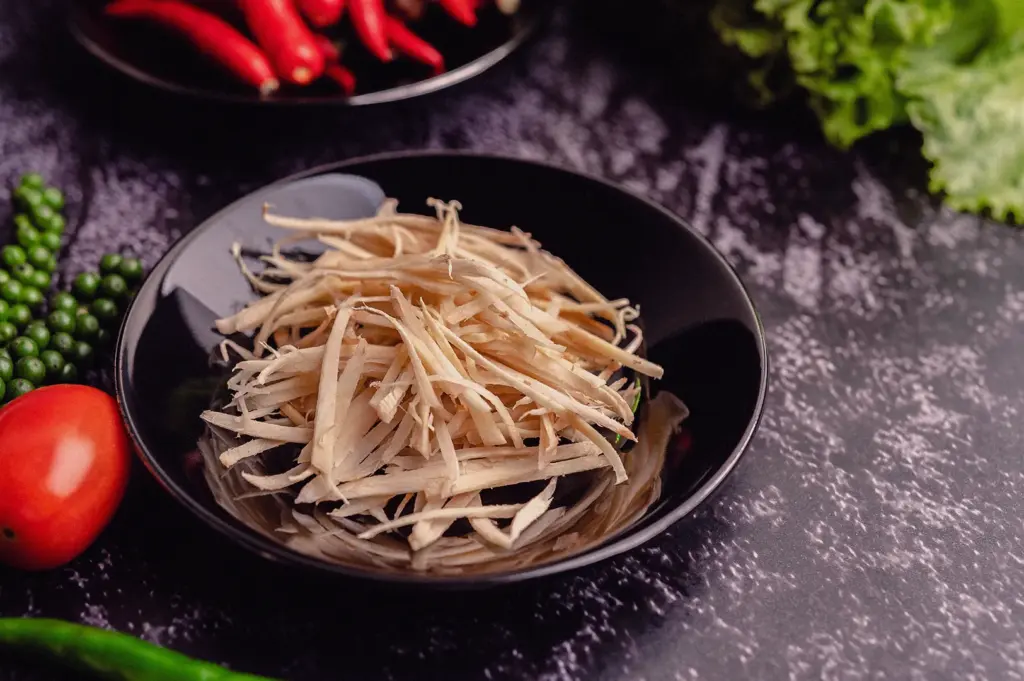
Aromatics added at the end keep their sharpness. Raw, julienned ginger tastes bright and clean. The same ginger simmered for an hour tastes rounder and quieter.
So, before adding an aromatic, decide whether you want it in the background or at the front. That choice matters as much as the ingredient.
How Common Aromatics Shift the Profile
Ginger
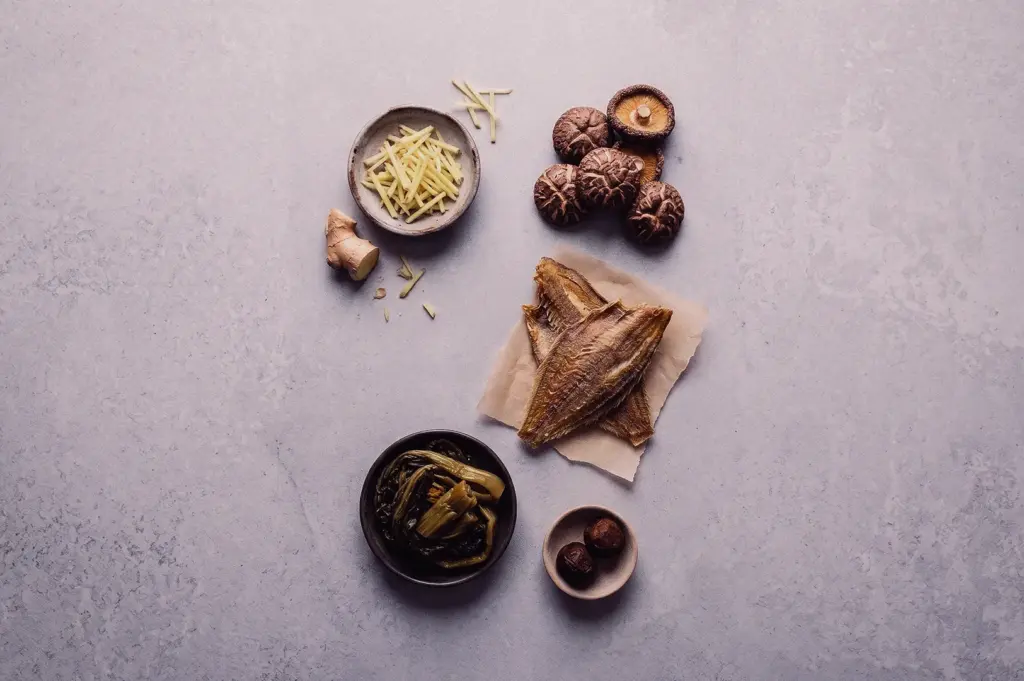
Ginger is the most common aromatic in Chinese fish soups. It cuts through richness and freshens the smell of the fish. Too much, and it takes over. Ginger should support the fish, not cover it.
Shiitake
Dried shiitake brings earthy, savoury depth. It suits broths built for long simmering and hearty bowls. With delicate fish, it can pull attention towards the mushroom. Shiitake changes a fish broth into something closer to a forest broth.
Dried Fish
Dried fish, such as tee poh (dried sole fillet), adds concentrated savoury flavour. It deepens a broth without making it muddy. It also keeps the flavour within the family of the sea. Dried fish deepens without changing direction.
Sour and Preserved Elements
Sour plum and salted mustard are not aromatics in the strict sense, but they shift a broth just as much. Sourness cuts richness, and preserved vegetables add a salty, tangy edge. They work best with rich, milky broths. Without them, a heavy broth can sit flat.
Where Our Broth Sits
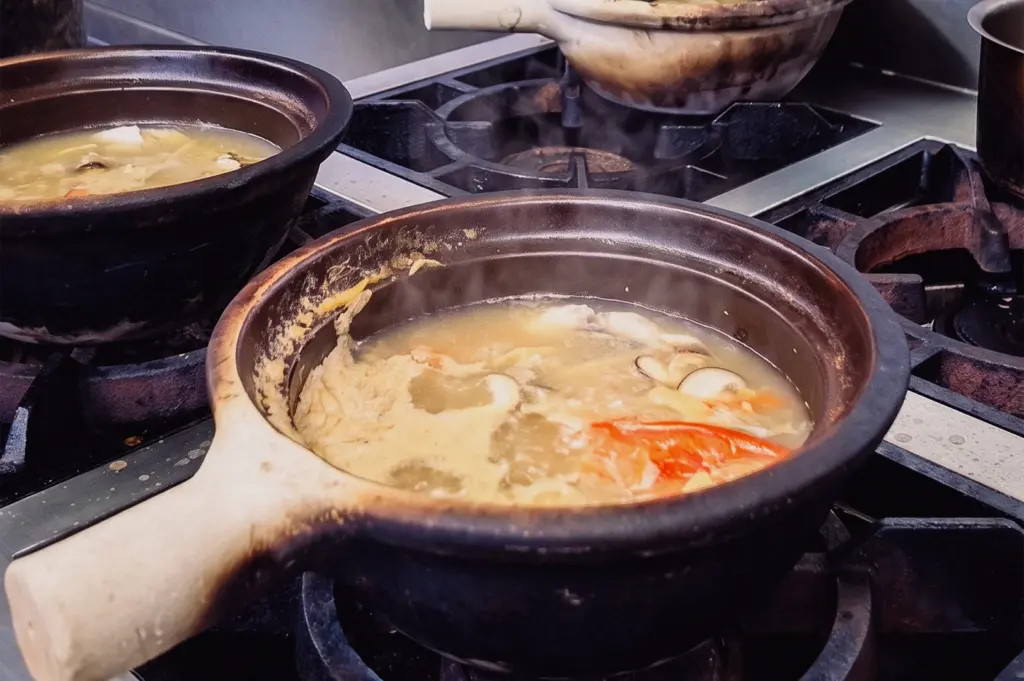
Our broth starts with batang bones, simmered with chicken and tee poh. The tee poh is the aromatic working inside the pot, adding depth from dried fish. The collagen from the bones gives the broth its naturally milky ivory body. There is no evaporated milk and no shell or siput base. The soup is white because the bones give everything.
The broth takes roughly one hour. The founder's father made his soup without a fixed written recipe. Chef Kee Leng, who is also a partner, balanced and refined it into the version we serve today. He set the ratios, heat and timing so the kitchen makes the same bowl each service.
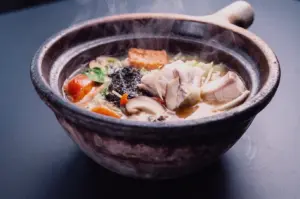
Grandpa's Pomfret Soup is named in honour of the founder's father. It is finished with generous pomfret slices, sng buay (sour plum), kiam chye (salted mustard) and julienned ginger. The ginger brings lift, the sour plum brings contrast and the salted mustard adds a salty edge. Together they keep a rich broth from feeling heavy. The pomfret stays at the centre of the bowl.
It Starts With the Fish
Aromatics can only shape what is already there. Good fish needs fewer corrections.
The founder's grandfather worked at Hup Seng Huat market before dawn, then hawked fish at the foot of Fort Canning in the afternoons, a pole across his shoulders. The founder's father helped from boyhood and later became a stallholder at Mei Ling market. The trade grew through a small factory in Redhill into Hai Sia Seafood at Jurong Fishery Port, now run by the founder's brother.
Hai Sia Seafood supplies our kitchen today, so fewer hands sit between the fish and the bowl. That is the starting point for a collagen-rich fish soup that does not need heavy aromatics to carry it. The restaurant is new. The family's knowledge of fish is not.
Key Takeaways
- Aromatics lift, deepen or contrast a broth.
- Aromatics simmered in the pot add depth, while aromatics added at the finish add sharpness.
- Ginger freshens, shiitake adds earthiness and dried fish deepens.
- Sour and preserved elements balance a rich broth.
- Choose aromatics that keep the fish at the centre.
Next time you are on Havelock Road, order Grandpa's Pomfret Soup. Taste the broth on its own first, then try a little ginger, sour plum and salted mustard, and notice how each one changes the bowl.