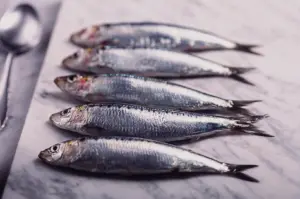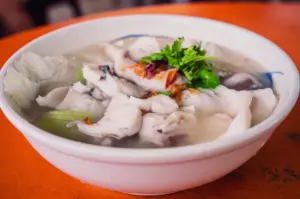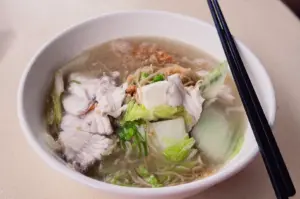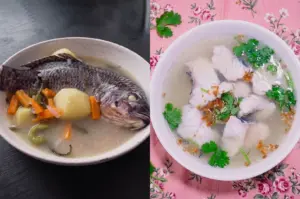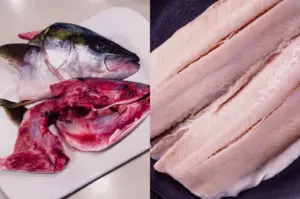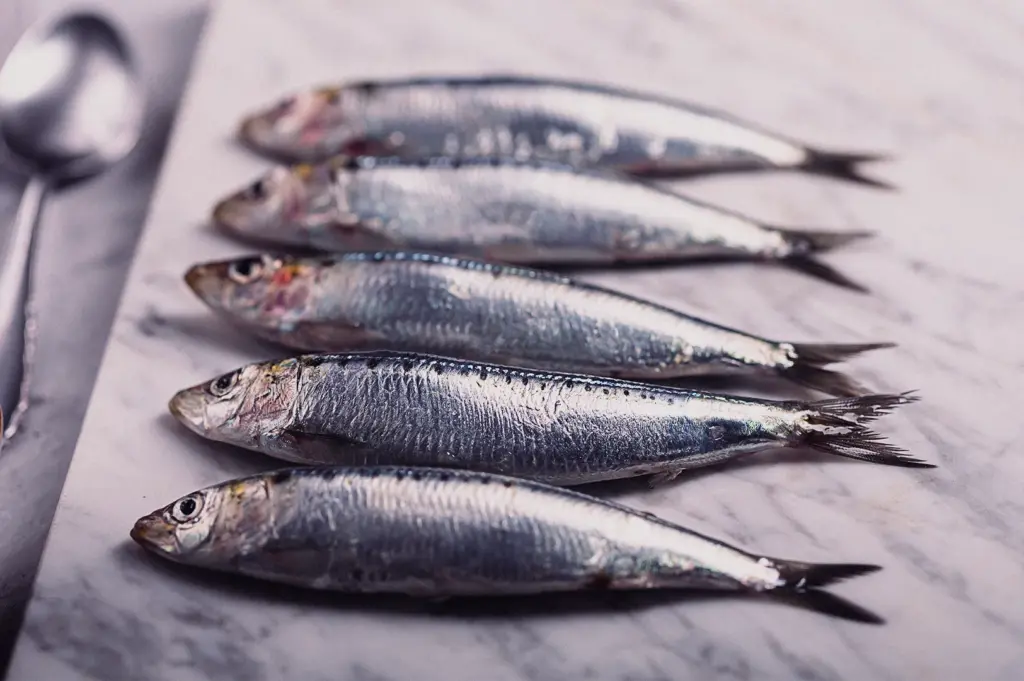
Oily fish can go into fish soup. Most cooks in Singapore still choose something else. The reason has less to do with taste than with what oil does to a simple broth.
This guide compares oily fish, such as mackerel and sardines, with the white fish usually found in a Singapore fish soup. It looks at flavour, how the broth looks, texture and the work needed to keep fishy notes in check. It also covers when oily fish does work. If you would rather taste the difference than read about it, you can explore the full dining experience on our homepage.
In short:
- Oily fish has a stronger flavour that can take over a gentle broth.
- Its fat floats, leaving a slick on the surface.
- Fishy notes build faster, so handling matters more.
- It works best in bold, sour or spiced soups, or in small amounts for depth.
What Makes a Fish "Oily"
Oily fish carry their fat through the flesh. White fish store most of theirs in the liver instead. That one difference shapes everything that happens in the pot.
Mackerel, sardines and similar fish sit at the oily end. Pomfret, threadfin, sea bass and grouper sit at the leaner end. Most fish soup in Singapore is built around the second group.
Oily Fish vs. White Fish in Soup
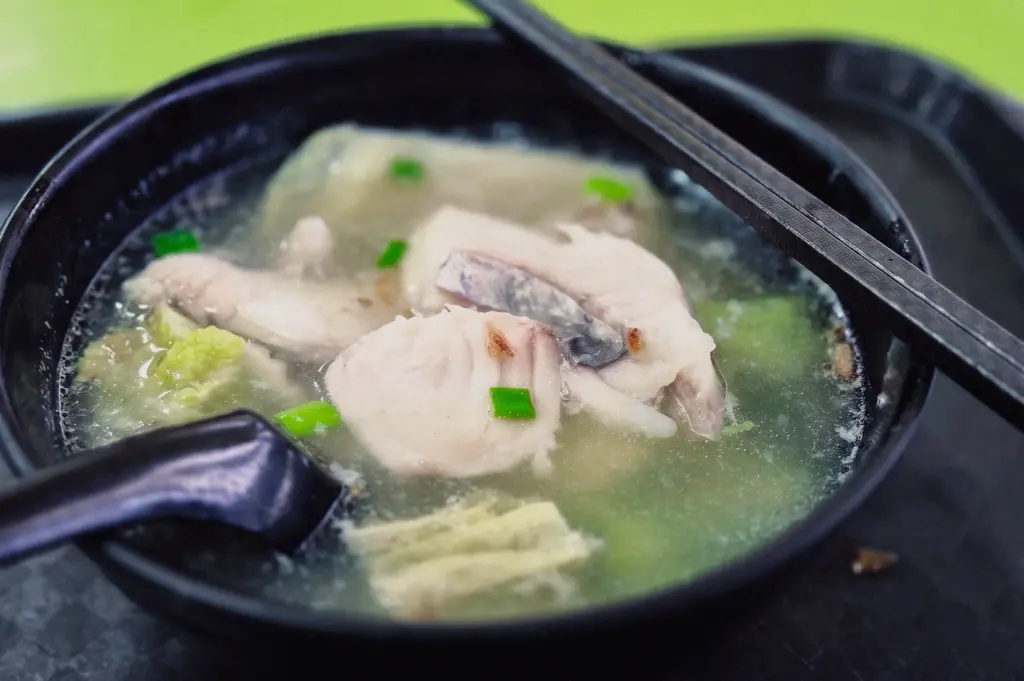
Flavour Intensity
Oily fish tastes strong and direct. The fat carries flavour into every spoonful of liquid. In a simple broth, it becomes the only thing you notice.
White fish tastes milder and cleaner. It leaves room for the broth and condiments. It sits in the bowl without taking over.
How the Broth Looks
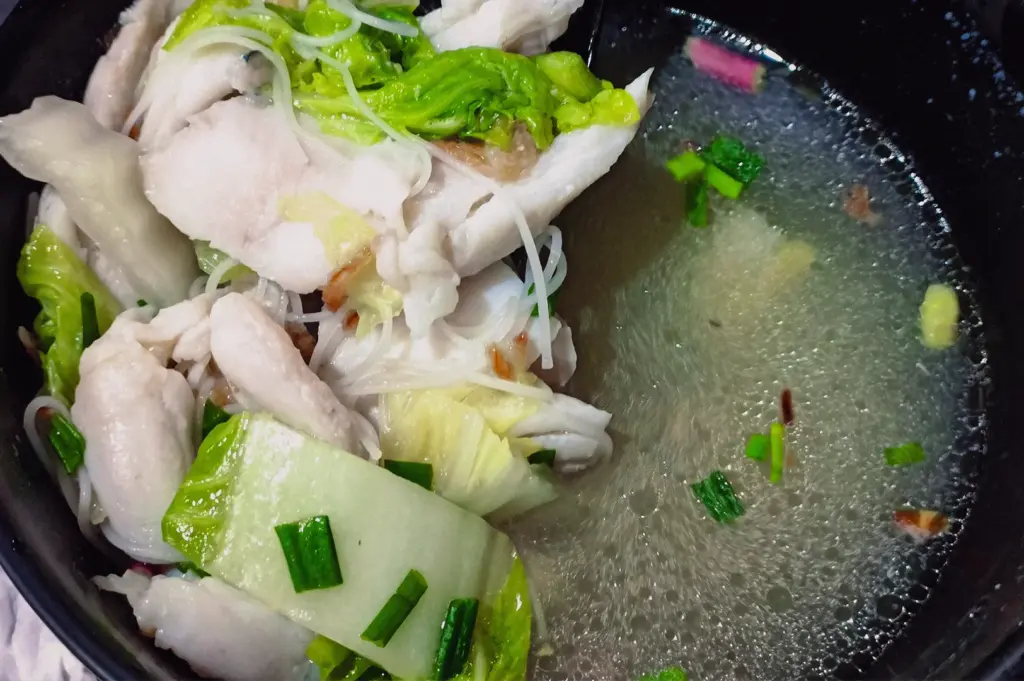
As oily fish simmers, its fat rises to the top. The broth can turn greyish and slick rather than clean. That is hard to correct once it happens.
White fish releases far less fat. Bones and skin give body through collagen instead. Body from collagen looks very different from a layer of oil.
Texture
Oily fish flesh is often softer and darker, with a richer feel in the mouth. Some people enjoy that. Others find it heavy in a soup.
White fish ranges from soft to firm, depending on the species. Either way, the bite tends to be cleaner. It suits a bowl that you finish to the last spoonful.
Managing Fishy Notes
The oil in oily fish turns quickly once the fish is out of the water. That is where strong fishy smells come from. Heat makes them more obvious.
Cooks can manage this by keeping the fish cold, cleaning it well and trimming the dark meat. Even then, a plain broth leaves little to hide behind. With oily fish, handling decides the result.
At a Glance
| Oily fish | White fish | |
|---|---|---|
| Flavour | Strong, direct | Mild, clean |
| Broth Appearance | Fat rises, slick on top | Little surface fat |
| Texture | Soft, rich, darker | Soft to firm, cleaner bite |
| Fishy Notes | Build quickly | Easier to control |
| Best Fit | Bold, sour or spiced soups | Simple, everyday fish soup |
When Oily Fish Works
Oily fish works when the soup is built to stand up to it. Sour, spiced or tamarind-based soups can balance the richness. The stronger broth meets the fish halfway.
It also works in small amounts. A little goes a long way in adding depth. The trick is to keep it in support, not in charge.
Where Batang Fits
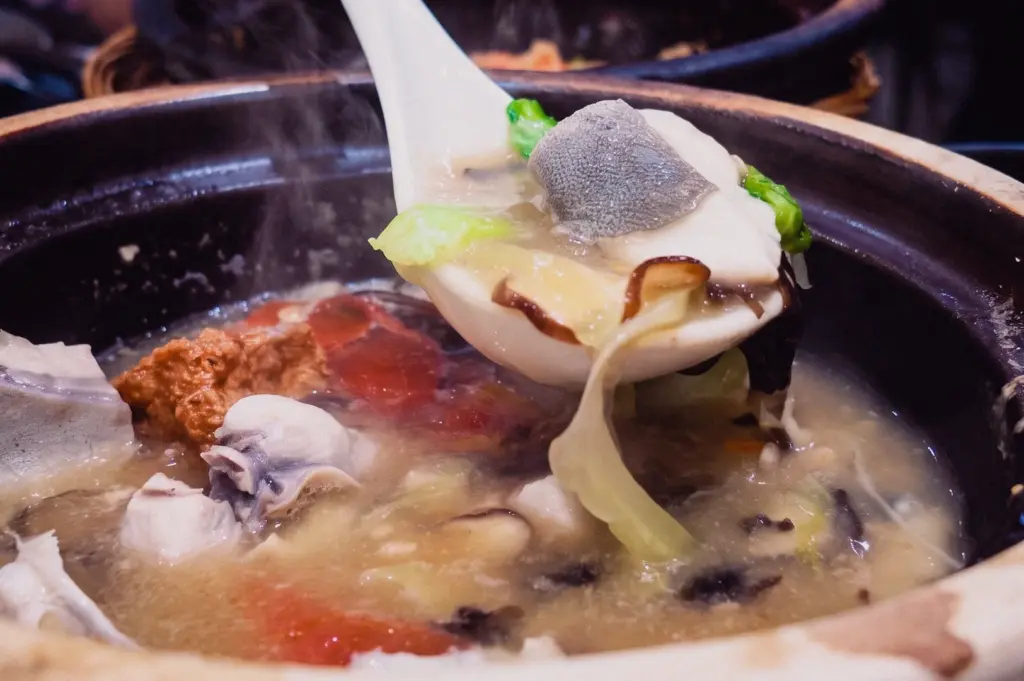
Batang is a Spanish mackerel. It belongs to the mackerel family, yet its flesh is leaner and firmer than many oilier fish. That makes it a useful middle ground.
Our broth starts with batang bones, simmered with chicken and tee poh, the dried sole fillet. The collagen from the bones gives the broth its naturally milky ivory body. There is no evaporated milk and no shell or siput base. The soup is white because the bones give everything.
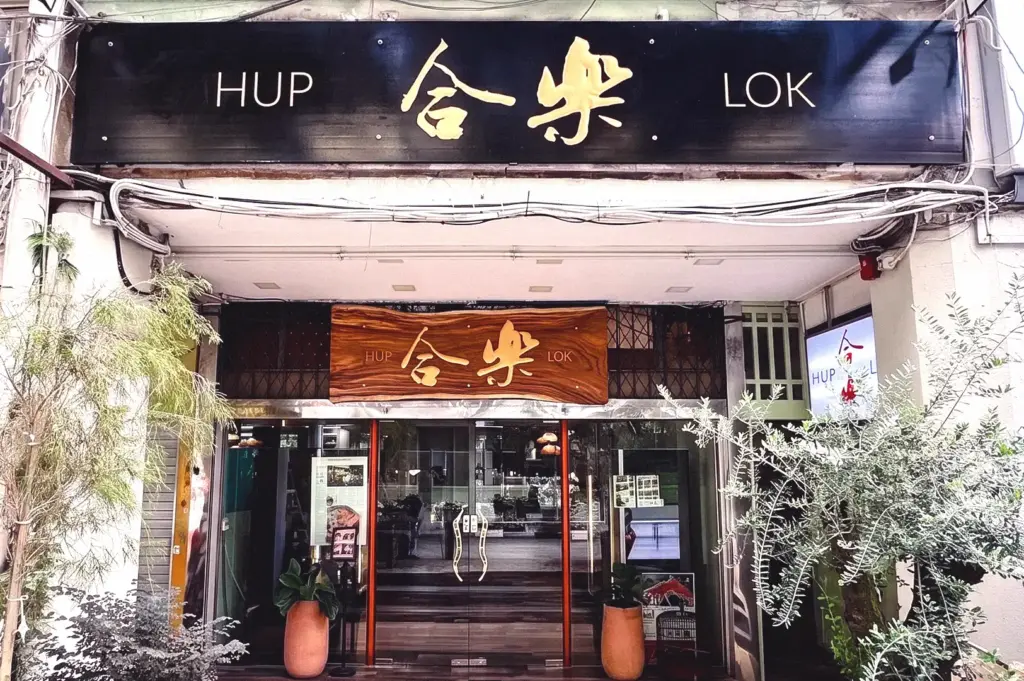
The bones give body. The pomfret gives sweetness. Hup Lok's signature dish, Grandpa's Pomfret Soup, is finished with generous pomfret slices, sng buay (sour plum), kiam chye (salted mustard) and julienned ginger. The pomfret stays at the centre of the bowl.
Knowing the Fish
Knowing which fish suits which job comes from years of handling them. The founder's grandfather worked at Hup Seng Huat market before dawn, then hawked fish at the foot of Fort Canning in the afternoons. The founder's father later became a stallholder at Mei Ling market. The trade grew into Hai Sia Seafood at Jurong Fishery Port, now run by the founder's brother.
Hai Sia Seafood supplies our kitchen today, so fewer hands sit between the fish and the bowl. That gives us more control over how the fish is handled. The restaurant is new. The family's knowledge of fish is not.
FAQ
Is mackerel good for fish soup?
It can be, in a bold or sour soup. In a simple broth, its oil and flavour tend to dominate.
Why does my fish soup taste fishy?
Oily fish, rough handling or too long in the heat are common causes. Keeping the fish cold and cleaning it well helps.
Does the cut of fish matter?
Yes. Bones, heads and slices each do different work in the pot. You can read about whole fish vs. fish slices in soup in our separate guide.
Next time you are on Havelock Road, order Grandpa's Pomfret Soup. Taste the broth on its own first, and notice the body without the oil.